Replacing Bathroom Mold-Resistant Green Board vs Standard Drywall Panels
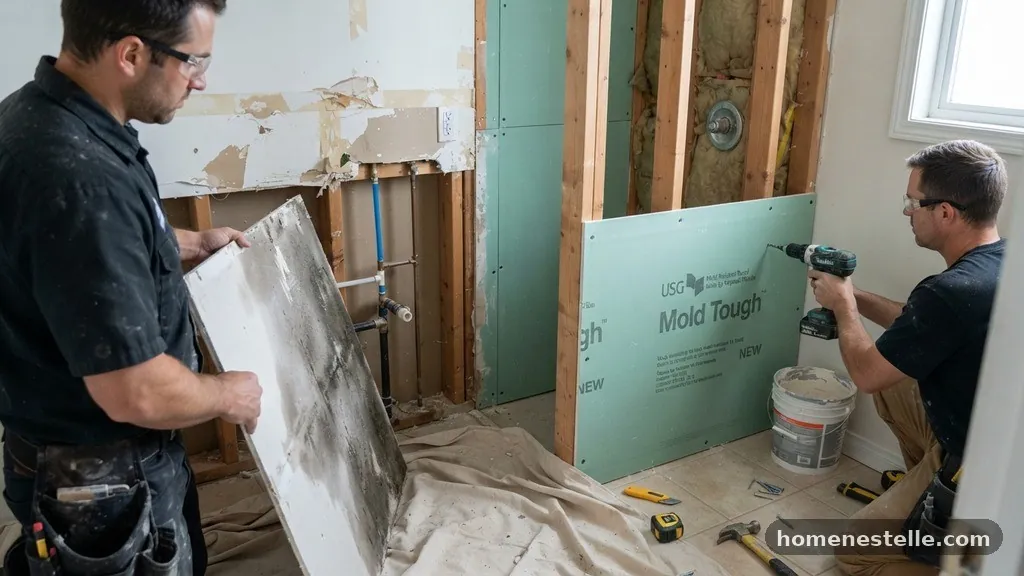
Deciding between materials when renovating a bathroom is a critical step for long-term durability. Many homeowners find themselves weighing the pros and cons of replacing bathroom mold-resistant green board vs standard drywall panels to ensure their space remains protected from humidity. While standard gypsum board is common in other rooms, bathrooms introduce specific challenges that require careful material selection.
Choosing the wrong panel can lead to expensive repairs, structural damage, and persistent mold issues. This article provides the technical details you need to make an informed decision for your home, ensuring your project meets current standards and survives the daily moisture cycles of a functional bathroom environment.
Understanding Material Differences in Bathroom Panels
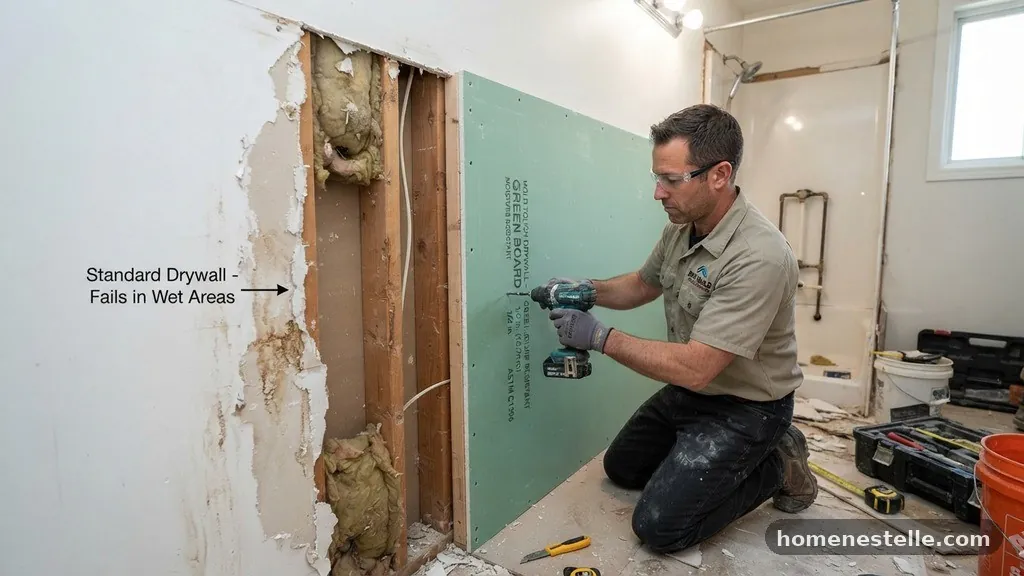
When you compare standard drywall to specialized moisture-resistant options, the primary difference lies in the composition of the core and the exterior facing. Standard drywall, or gypsum board, consists of a gypsum plaster core sandwiched between two layers of paper.
In high-humidity environments, that paper facing acts like a sponge, drawing moisture into the gypsum core. Once the core becomes damp, the structural integrity of the sheet begins to fail, leading to sagging, crumbling, and the perfect environment for fungal growth.
Green board, by contrast, features a water-resistant paper facing that is treated with additives to repel moisture. This green-colored paper provides a temporary barrier against humidity, which is why it became the industry standard for bathrooms for several decades.
However, it is important to understand that green board is not waterproof. If it stays wet for extended periods, the paper will eventually fail and the core will soften, just like standard drywall.
In recent years, the industry has shifted away from simple green board toward advanced mold-resistant drywall panels. These modern products often incorporate a fiberglass mat facing instead of paper, which is inherently resistant to mold because there is no organic food source for spores to colonize. When you are looking at replacing bathroom mold-resistant green board vs standard drywall panels, you are essentially choosing between a legacy product that offers limited protection and newer, more robust alternatives that provide superior defense against water damage.
Evaluating the Risks of Using Standard Drywall
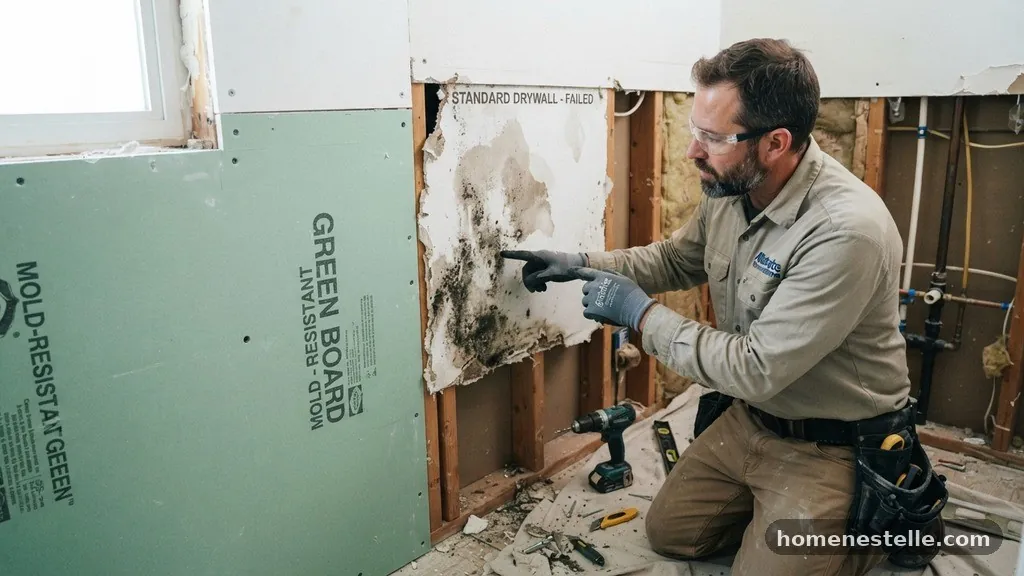
Using standard gypsum board in a bathroom is almost universally discouraged by professionals. Even with high-quality paint and primer, the microscopic pores in standard paper facing allow water vapor to penetrate the surface.
Bathrooms generate significant amounts of steam during daily use, which inevitably finds its way behind the paint layer. Once moisture is trapped against the drywall, the paper facing begins to degrade.
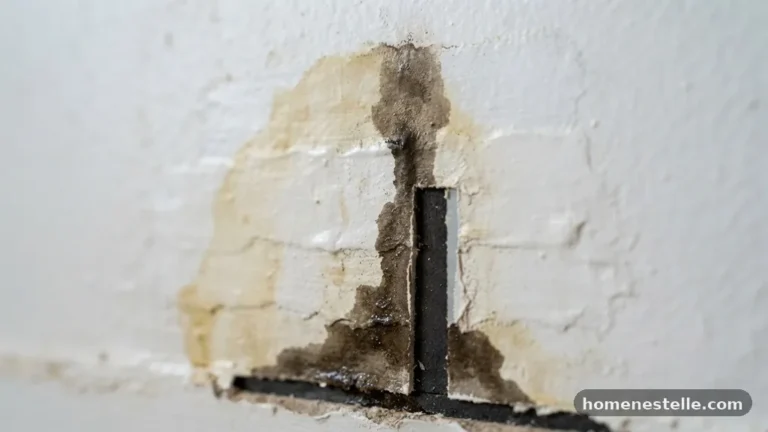
The consequences of this degradation are rarely immediate, which is why many homeowners mistakenly assume standard drywall is safe. Over time, the moisture leads to the growth of mold colonies beneath the surface, hidden from plain view.
You might see bubbling paint or warped baseboards as the first signs of failure, but by that point, the damage to the wall structure is often extensive. Replacing bathroom mold-resistant green board vs standard drywall panels often becomes a conversation about mitigation once standard boards have already failed.
Beyond the moisture issue, standard drywall lacks the tensile strength required for the rigors of a bathroom. The constant expansion and contraction cycles caused by temperature changes and humidity fluctuations put stress on the joints and fasteners.
Standard panels are more prone to cracking at the seams compared to boards designed specifically for wet areas. If you decide to cut costs by using standard panels, you are essentially trading a small initial saving for a high risk of future renovation costs.
Why Green Board Is Often Considered Obsolete
Green board served a purpose when it was first introduced, but it is rarely, if ever, the best choice for modern construction. It was designed to resist occasional splashes, but it was never intended for direct contact with water.
Because it still uses a paper facing, it remains susceptible to mold growth if it remains damp for long periods. Professional contractors often avoid it because the market now offers products that perform significantly better for a similar price point.
Many building codes have also evolved to reflect these performance limitations. In many jurisdictions, green board is no longer considered an acceptable substrate for tile in a shower surround.
If you are planning a renovation, it is vital to check your local requirements before purchasing materials. Relying on outdated practices can lead to failed inspections or, more importantly, a bathroom that does not protect your home from moisture damage.
The shift away from green board is driven by the availability of high-performance alternatives like fiber cement backer board. These materials are inorganic, meaning they cannot support mold growth even if they get wet.
When comparing the long-term value, the cost difference between upgrading to a superior product and sticking with traditional green board is negligible. Investing in better materials during the initial phase of your project is the most effective way to avoid the headache of a second, premature renovation.
The Role of Cement Board in Shower Surrounds
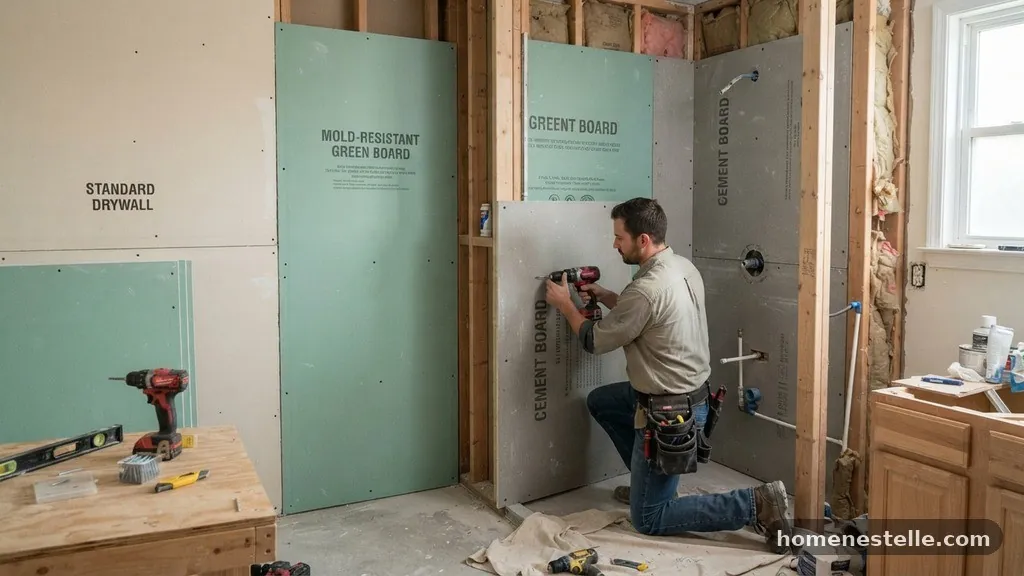
When it comes to the area immediately surrounding a bathtub or shower, neither standard drywall nor green board is the correct choice. These areas require a substrate that can handle direct, frequent water exposure without losing its structural integrity.
Cement board or fiber cement backer board is the industry-standard material for these high-moisture zones. These boards are composed of cement, sand, and reinforcing fibers, making them completely impervious to water.
Unlike gypsum-based products, cement board will not soften, rot, or degrade when exposed to water. It provides an exceptionally stable base for tile, which helps prevent grout lines from cracking over time.
Because tile grout is porous, some water will always pass through to the substrate. Using a cement board ensures that this moisture does not cause the wall to collapse or mold to flourish behind your expensive tile work.
Installation of cement board requires specific tools, including carbide-tipped blades for cutting and specialized corrosion-resistant screws. You must also ensure the boards are properly secured to the studs to prevent movement.
While it is more labor-intensive to install than traditional drywall, the peace of mind it provides in a shower setting is unmatched. If you are replacing bathroom mold-resistant green board vs standard drywall panels in a wet area, you should seriously consider upgrading to cement board instead.
Comparing Costs and Long-Term Value
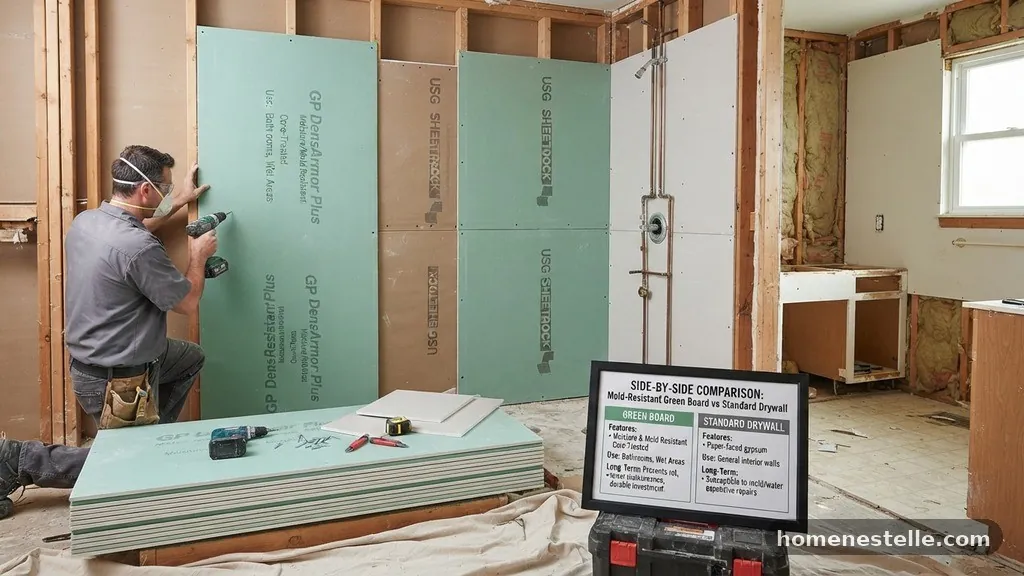
Budgeting for a bathroom renovation involves more than just the price of the panels themselves. While standard drywall is the cheapest option per sheet, the long-term cost of maintenance and potential repairs must be factored into the equation.
A small leak or persistent humidity issue can ruin standard drywall in a matter of months, requiring you to tear out tile, fixtures, and insulation. The initial savings are quickly erased by the cost of labor and materials for a second repair cycle.
Mold-resistant drywall sits in the middle of the price range, offering a significant upgrade over standard panels without the high cost of specialized backer boards. It is a cost-effective solution for bathroom walls that are not directly in the splash zone, such as near the vanity or toilet. By using these panels in combination with cement board in the shower, you create a tiered defense system that is both budget-friendly and durable.
The following table outlines the general performance characteristics of the various materials used in bathroom wall construction:
| Material Type | Moisture Resistance | Best Use Case | Mold Susceptibility |
|---|---|---|---|
| Standard Drywall | Low | Dry rooms only | High |
| Green Board | Moderate | Bathroom walls | Moderate |
| Mold-Resistant Drywall | High | Bathroom walls/ceilings | Low |
| Cement Board | Excellent | Shower/Tub surrounds | None |
Installation Tips for Longevity
Proper installation is just as important as the material choice when you are replacing bathroom mold-resistant green board vs standard drywall panels. Even the most expensive moisture-resistant board will fail if the seams are not sealed correctly or if the ventilation is inadequate.
Moisture will always find the path of least resistance, which is usually at the joints between panels or around fasteners. You must use high-quality, mold-resistant joint compound and tape to seal these areas effectively.
Managing moisture gaps is another essential aspect of a professional installation. When installing panels, leave a small gap—typically about 1/8 to 1/4 inch—between the bottom edge of the board and the floor or the top of the bathtub flange.
This gap prevents the board from wicking up standing water from the floor or the tub rim. You can cover this gap with a bead of high-quality silicone sealant or a trim piece, which provides a clean finish while keeping water out of the wall cavity.
Sealing joints and fasteners is the final line of defense. Ensure that all joints, corners, and screw heads are thoroughly covered with moisture-resistant compound.
If you are using a cement board for a tile installation, you should also apply a liquid-applied waterproofing membrane over the entire surface of the boards. This creates a monolithic, waterproof layer that prevents water from ever reaching the structural components of the wall.
Why Ventilation Is Non-Negotiable
No matter how moisture-resistant your wall panels are, they cannot overcome a total lack of ventilation. Bathrooms are high-humidity zones by design, and that moisture needs a way to escape.
If you do not have an effective ventilation strategy, water vapor will condense on your walls, ceiling, and fixtures. This condensation can cause paint to peel and mold to grow on the surface of even the most expensive moisture-resistant materials.
Your bathroom exhaust fan should be sized appropriately for the square footage of the room. A common mistake is installing a fan that is too weak to clear the air effectively after a hot shower.
You should look for a model that provides enough air changes per hour to keep the humidity levels under control. It is also important to ensure that the vent ducting is properly insulated and leads directly to the outside of the house, rather than just into the attic.
If you don’t have an exhaust fan, keeping the door open and using a small dehumidifier can help, but these are secondary solutions. A high-quality fan is the only way to actively manage the moisture that leads to wall failure.
When you are replacing bathroom mold-resistant green board vs standard drywall panels, view your ventilation system as part of the wall protection package. Without proper airflow, even the best materials will eventually succumb to the persistent moisture in a bathroom.
Identifying Signs of Existing Wall Damage
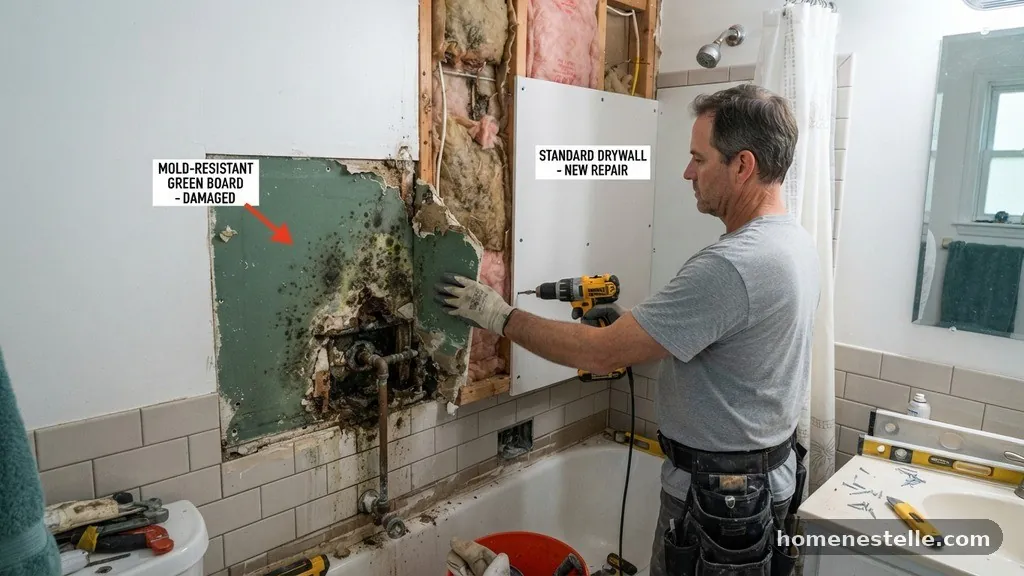
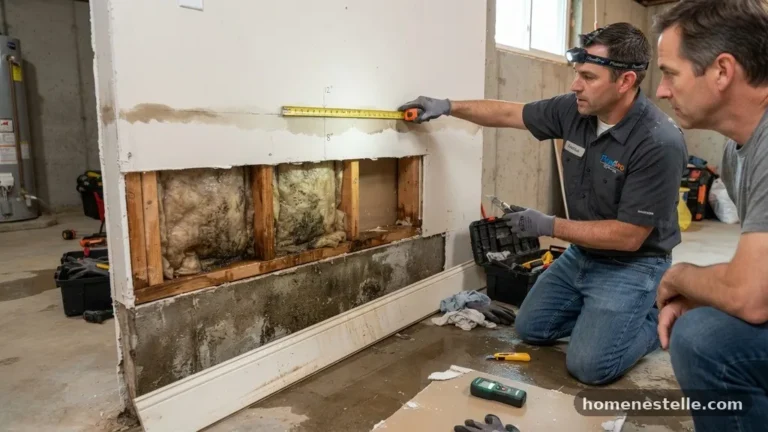
Before beginning a renovation, it is rarely, if ever, a good idea to ignore the condition of your existing walls. If you are planning to paint or tile over old walls, you must first inspect them for hidden moisture damage.
Look for dark spots, soft areas, or a musty smell, which are all indicators of a compromised wall. If the drywall feels spongy when you press on it, it has already lost its structural integrity and must be replaced.
You should also check the areas around plumbing fixtures, as these are common entry points for leaks. Small pinhole leaks in pipes can spray water inside the wall cavity for months before they are discovered.
By the time you see damage on the outside of the wall, the framing behind it may already be showing signs of rot. Replacing bathroom mold-resistant green board vs standard drywall panels is the perfect time to open the walls and inspect the plumbing, insulation, and electrical wiring.
If you find mold, do not simply cover it up. You must identify and eliminate the source of the moisture first, then clean or replace the affected materials.
Using a bleach solution or professional mold remediation product is necessary to kill the spores before installing new boards. Taking the time to address these underlying issues will save you from having to tear everything out again in a few years.
Choosing the Right Professional Assistance
Bathroom renovations are among the most complex DIY projects due to the number of trades involved. You are dealing with plumbing, electrical, drywall, and tiling, all of which must be integrated perfectly to avoid leaks.
If you are not experienced with these tasks, hiring a professional contractor is often the most cost-effective decision. A contractor will understand the nuances of building codes and the specific requirements for different wall substrates.
When interviewing professionals, ask them about their approach to moisture management. A knowledgeable contractor will have a clear plan for how they intend to seal joints, which type of board they recommend for different zones of the bathroom, and how they handle ventilation. You can verify their expertise by asking how they would handle the transition between a shower area and the rest of the bathroom wall.
You can also consult the official guidelines provided by organizations like the Gypsum Association, which offers detailed technical information on the correct installation of gypsum board products. Knowing the industry standards will help you evaluate the advice you receive from contractors. If a professional suggests using standard drywall for a shower area, it is a red flag that they are not following modern best practices.
Common Questions Regarding Bathroom Panels
Why is green board being phased out in modern bathrooms?
Green board is being phased out because newer, more effective materials have become widely available. While it offers a slight improvement over standard drywall, its paper facing still provides a food source for mold and can eventually fail when exposed to constant moisture. Modern mold-resistant panels and cement boards perform significantly better, making them the preferred choice for contractors and building inspectors alike.
Do I need mold-resistant drywall in the entire bathroom?
While it is not strictly required by all building codes for the entire room, it is highly recommended. Bathrooms have higher ambient humidity than other rooms, and using mold-resistant panels provides a consistent layer of protection throughout the space. It is a small investment that adds significant value and longevity to your walls, especially in areas that aren’t directly tiled.
Can mold grow on green drywall?
Yes, mold can grow on green drywall. Although the paper facing is treated to be water-resistant, it is still organic material. If the board remains damp due to leaks, high humidity, or poor ventilation, mold spores can colonize the paper surface. This is why many professionals now prefer fiberglass-faced panels that are inherently inorganic and resistant to mold growth.
Which is better for a bathroom, cement board or drywall?
Cement board is superior for areas that will be tiled, such as shower surrounds and backsplashes, because it is completely waterproof and provides a rigid base for tile. Drywall, even in its mold-resistant form, is primarily meant for wall surfaces that will be painted. Using the right material for the specific area of the bathroom is the key to a long-lasting renovation.
Final Thoughts on Durable Bathroom Renovations
Selecting the right materials for your home is an investment in the long-term health of your property. When you are replacing bathroom mold-resistant green board vs standard drywall panels, focus on the specific needs of each area of the room rather than looking for a one-size-fits-all product. By using cement board in wet zones and high-quality moisture-resistant panels on the surrounding walls, you create a durable, mold-resistant envelope that will stand up to years of daily use.
Remember that material choice is only half the battle. Proper installation techniques, such as sealing joints and ensuring adequate ventilation, are essential to preventing moisture buildup.
If you are unsure about any part of the process, do not hesitate to consult with a professional or refer to established industry standards. Taking the time to do it right the first time will save you from the stress of future repairs and keep your bathroom looking its best for years to come.