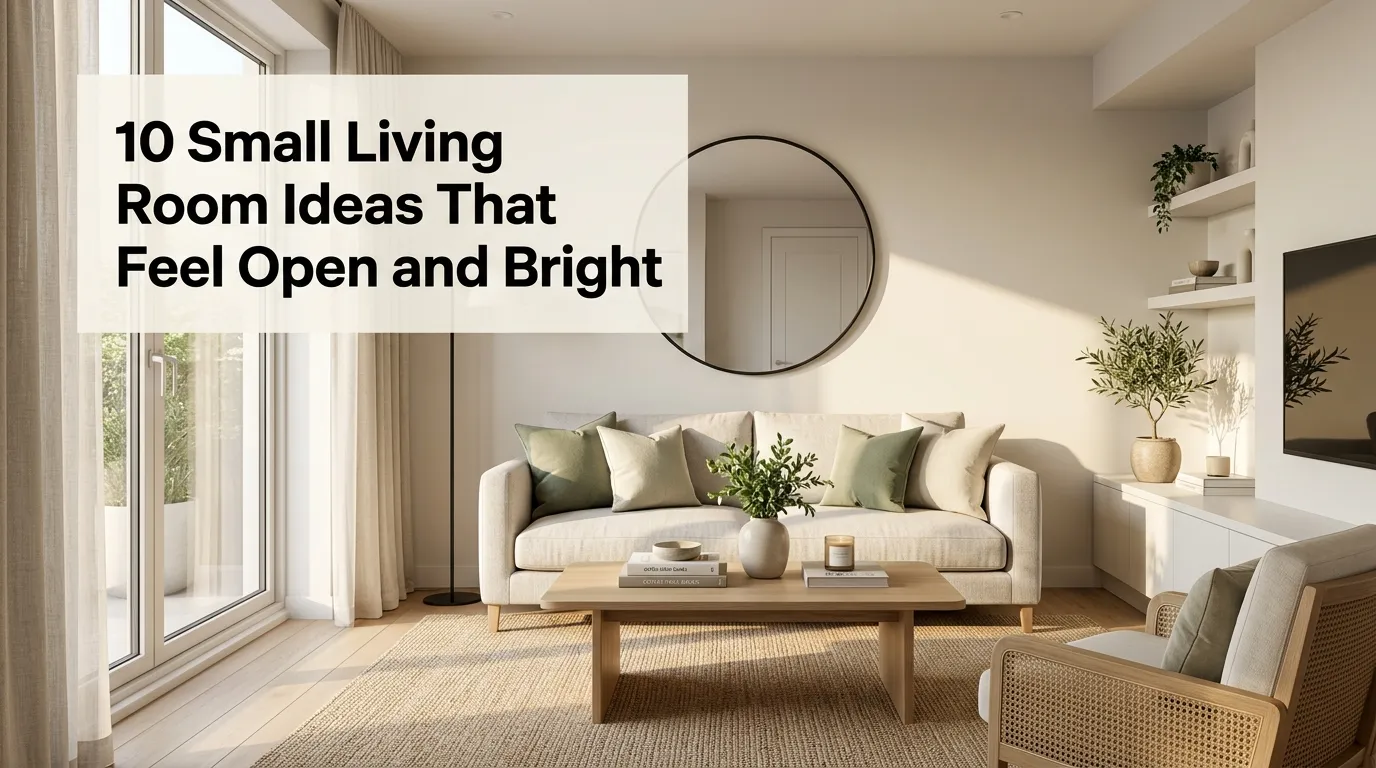
10 Small Living Room Ideas That Feel Open and Bright
If you’ve ever stood in the doorway of your living room wondering why it feels smaller than it actually is, you’re not alone. In my experience working with tight floor plans — apartments, starter homes, converted dens — the issue is almost never the square footage itself. It’s usually the furniture placement, the lighting, or a color palette that’s quietly working against the room instead of for it.
A cramped-feeling living room can make an entire home feel stressful, cluttered, and hard to relax in. That’s the part people don’t talk about enough. It’s not just an aesthetic problem — it affects how you actually live day to day, whether you want to invite people over, and how calm you feel when you walk in after a long day.
The good news is that small living room ideas don’t require a renovation or a big budget. Some of the most dramatic transformations I’ve seen came from small, intentional shifts: a mirror placed correctly, furniture pulled off the walls, a lighter rug, or a curtain hung higher than expected. One thing that works especially well is layering several of these ideas together rather than relying on just one trick.
This guide walks through ten approaches that consistently make compact living rooms feel larger, brighter, and more livable. Each one includes the reasoning behind why it works, plus practical guidance for how to actually style it in your own space — no matter your layout or budget.
Table of Contents
- Natural Light Flow — Positioning furniture and window treatments to maximize daylight.
- Light Neutral Palette — Using color strategically to visually expand walls.
- Multi-Purpose Furniture — Choosing pieces that do double duty to reduce clutter.
- Floating Furniture Layout — Pulling seating away from walls to create movement.
- Vertical Storage Solutions — Using height instead of floor space for storage.
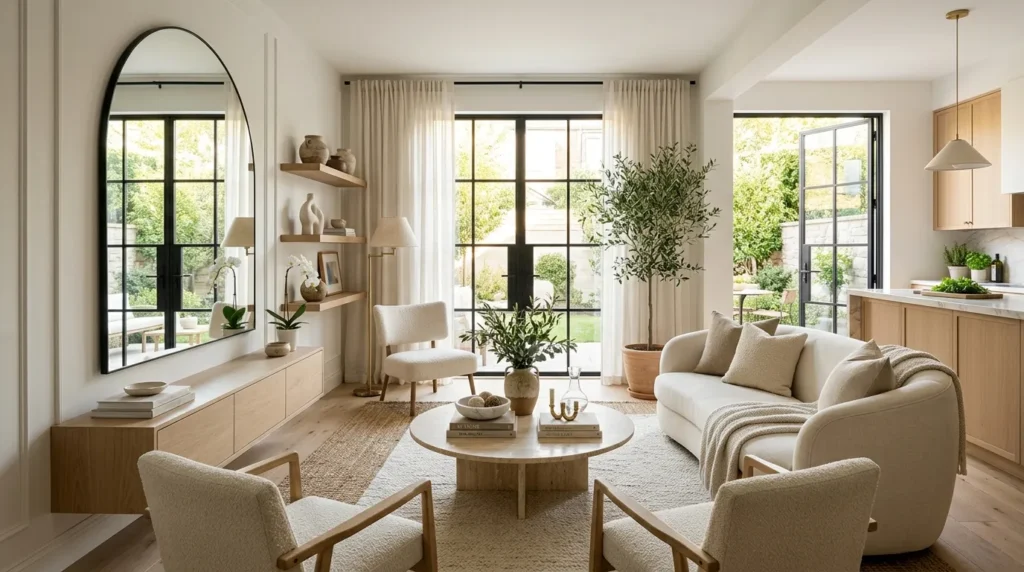
- Strategic Mirror Placement — Bouncing light and creating visual depth.
- Sheer Curtain Styling — Softening windows without blocking light.
- Low-Profile Seating — Choosing furniture scale that suits smaller rooms.
- Statement Lighting Layers — Building brightness with layered light sources.
- Curated Minimal Decor — Editing accessories for breathing room.
1. Natural Light Flow
Quick Benefits
- Makes the room feel airier within minutes
- Reduces reliance on artificial lighting during the day
- Highlights architectural features
- Improves mood and energy in the space
- Costs nothing to rearrange
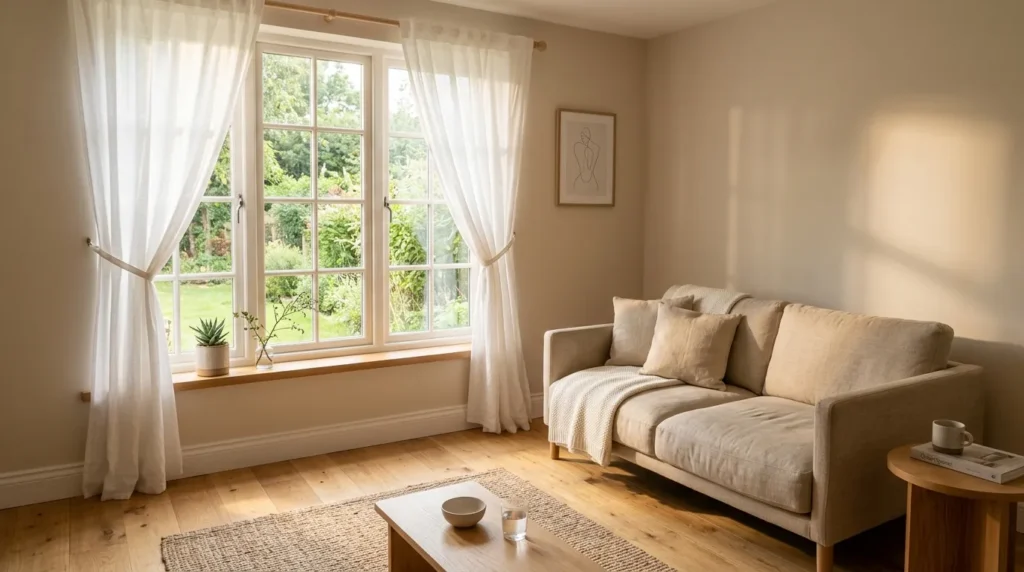
Why It Works Daylight is the single most powerful tool for making a small room feel bigger, and yet it’s the most commonly blocked resource in tight layouts. A mistake many homeowners make is placing a bulky sofa or bookshelf directly in front of a window, which cuts off both the light source and the sightline to the outdoors. When a room can “see” outside clearly, the brain reads the space as an extension of the outdoors rather than a boxed-in room. I’ve noticed that even rooms with a single small window feel noticeably more open once the path from the window to the far wall is left clear.
How To Style It Start by mapping where light enters throughout the day, then arrange your largest furniture — sofas, media consoles, bookshelves — perpendicular to or away from that path rather than blocking it. Swap heavy drapes for lighter fabrics that let filtered light through even when closed. If privacy is a concern, consider frosted film on lower window panes instead of heavy curtains. Keep windowsills clear of stacked books or plants that create visual clutter right at the light source.
2. Light Neutral Palette
Quick Benefits
- Visually pushes walls outward
- Creates a calm, cohesive backdrop
- Pairs easily with changing decor trends
- Reflects available light more efficiently
- Works in both rentals and owned homes
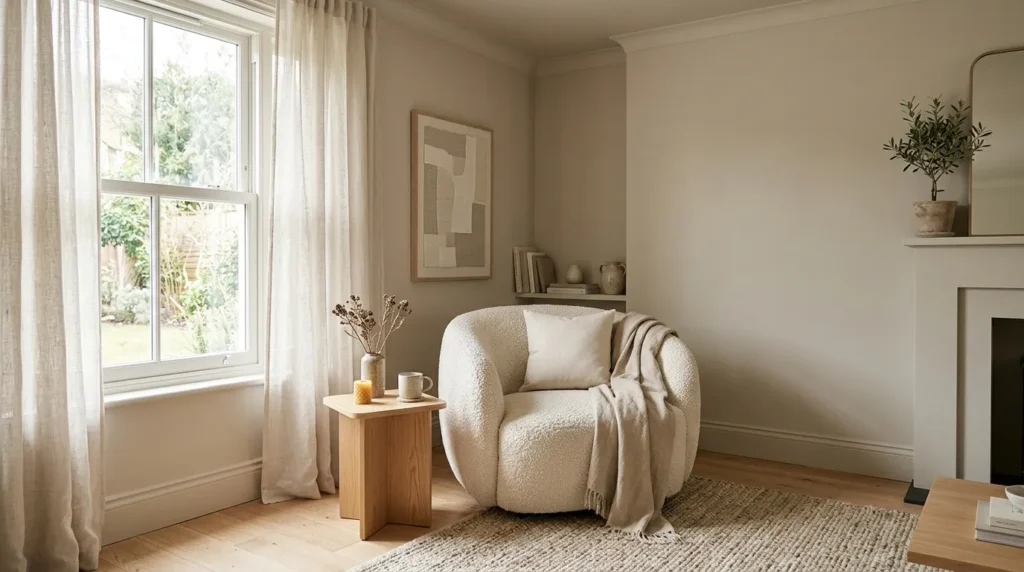
Why It Works Color is one of the fastest ways to change how a room reads in terms of scale. Dark, saturated wall colors absorb light and make boundaries feel closer, which is exactly what you don’t want in a compact living room. That’s why many designers recommend soft whites, warm greiges, or muted sage tones for smaller spaces — they reflect rather than absorb the light already available. A neutral palette also acts as a blank canvas, letting texture and furniture silhouettes do the visual work instead of competing wall colors.
How To Style It Choose a warm white or soft neutral for walls and trim in the same tone to avoid choppy sightlines. If an accent wall feels necessary, keep it on a shorter wall rather than the longest one, which prevents the room from feeling boxed in. Bring in color instead through pillows, art, or a rug so the palette stays flexible. Satin or eggshell finishes reflect more light than flat paint, which is a small but meaningful detail in low-light rooms.
3. Multi-Purpose Furniture
Quick Benefits
- Reduces the total number of pieces needed
- Solves storage without added bulk
- Adapts to different uses throughout the day
- Keeps floor space open
- Great for renters who need flexibility
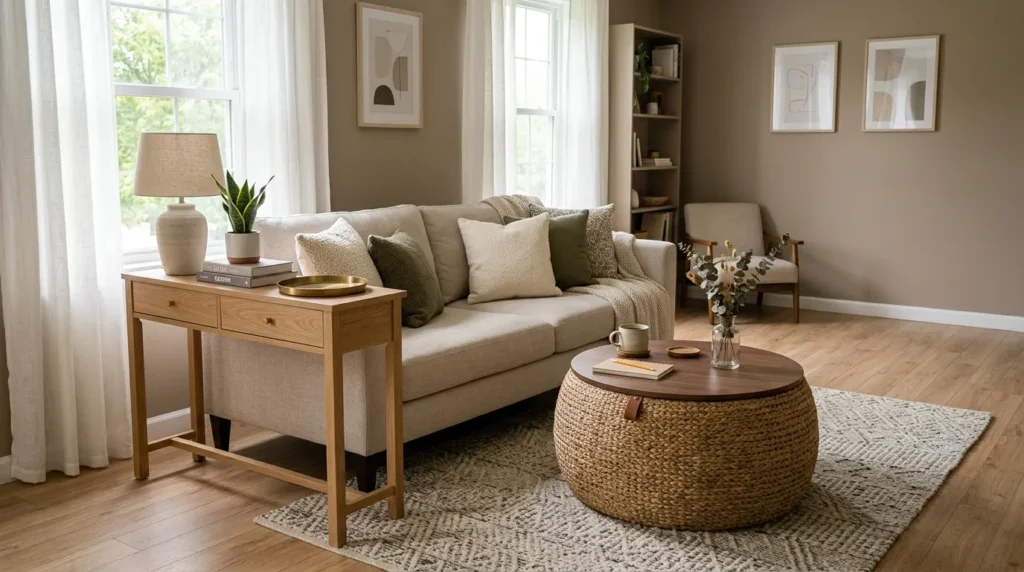
Why It Works In a small living room, every piece of furniture has to earn its spot twice. A mistake many homeowners make is furnishing a small room the same way they would a larger one — a coffee table, a separate storage bench, a side table, and an accent chair all competing for the same few square feet. Multi-purpose furniture consolidates function, which directly reduces visual clutter. I’ve seen this idea transform spaces where a single storage ottoman replaced a coffee table, a footstool, and extra blanket storage all at once.
How To Style It Look for a storage ottoman that can serve as a coffee table, footrest, and extra seating when guests come over. A console table with drawers behind the sofa can double as a laptop station and entryway catch-all. Nesting tables are especially useful since they can expand for entertaining and tuck away completely the rest of the time. Choose pieces with legs rather than solid bases wherever possible, since visible floor beneath furniture reads as open space.
4. Floating Furniture Layout
Quick Benefits
- Creates a sense of walkable flow
- Prevents the “everything against the wall” look
- Encourages conversation-friendly seating
- Makes the room feel designed, not just filled
- Works even with a single sofa
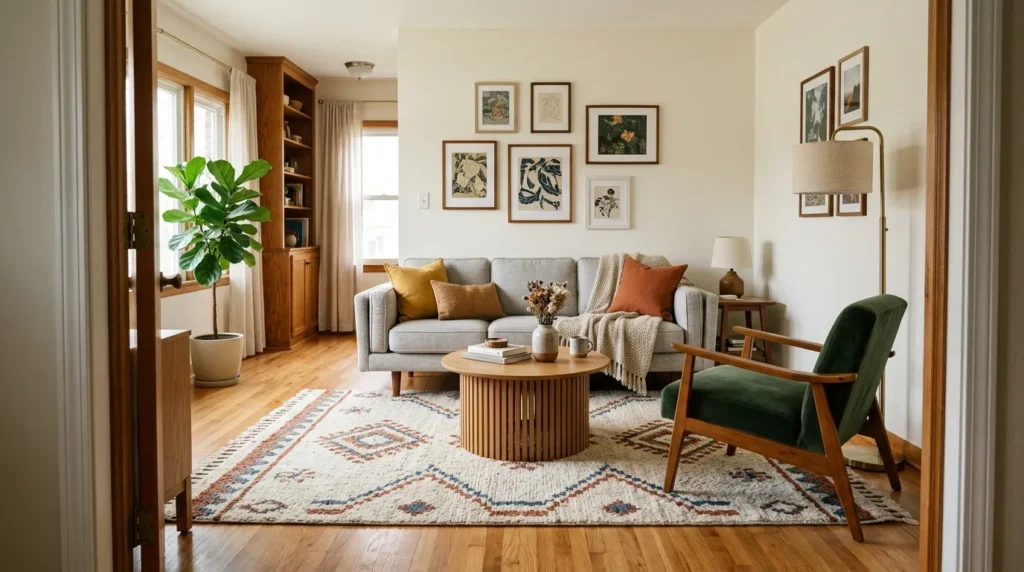
Why It Works Pushing every piece of furniture against the perimeter walls is one of the most common instincts in a small space, but it often backfires. Floating the sofa even six to twelve inches off the wall, or angling a chair into the room, creates depth and makes the layout feel intentional rather than crammed. In my experience, rooms that “float” at least one piece of furniture read as considerably larger than rooms with everything flush against the walls, even when the actual floor space is identical.
How To Style It Pull your sofa slightly away from the wall and use the gap behind it for a slim console or simply as breathing room. Angle an accent chair at 45 degrees toward the seating area instead of squaring it off with the wall. Use a rug to anchor the furniture grouping so it feels like a defined zone rather than pieces scattered around the room’s edges. If the room is very tight, even a few inches of floated space makes a visible difference.
5. Vertical Storage Solutions
Quick Benefits
- Frees up valuable floor space
- Draws the eye upward, which raises perceived ceiling height
- Adds storage without new furniture footprint
- Works well in awkward corners
- Doubles as display space
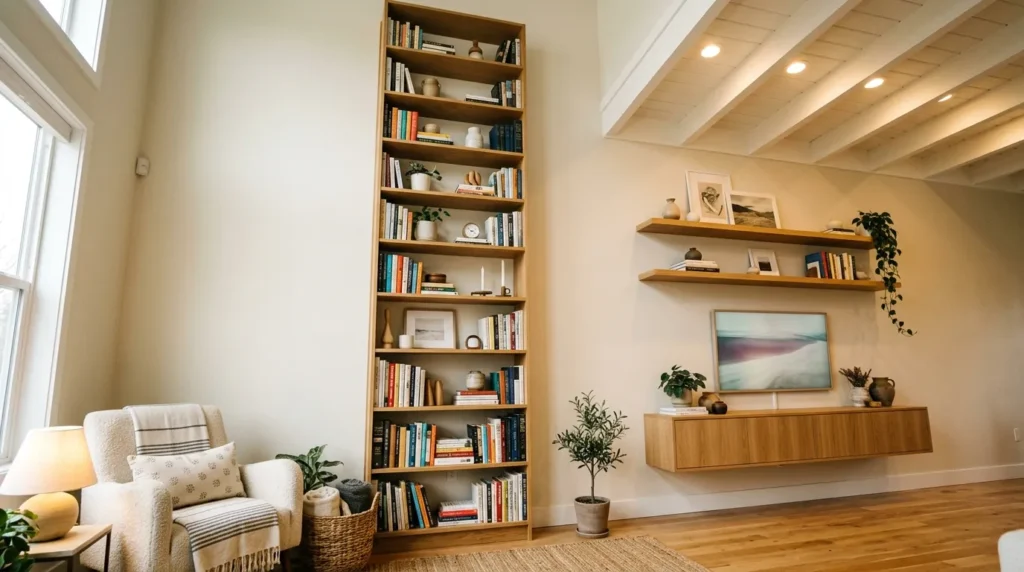
Why It Works When floor space is limited, height becomes the next best resource. Tall, narrow storage — think bookshelves, wall-mounted cabinets, or floating shelves — uses vertical real estate that’s otherwise wasted. This also has a secondary benefit: the eye naturally travels upward, which tricks the brain into perceiving a taller, more open room. One simple trick I always suggest is choosing shelving that goes almost to the ceiling rather than stopping at eye level, since the unused wall space above short furniture actually makes rooms feel more cramped, not less.
How To Style It Install floating shelves above a console or sofa to display books and decor without using floor space. Choose a tall, slim bookshelf over a short, wide one whenever possible. Wall-mounted media consoles free up the floor entirely and work particularly well in apartments. Keep the top shelf or two slightly emptier than the rest so the eye has a place to rest before reaching the ceiling line.
6. Strategic Mirror Placement
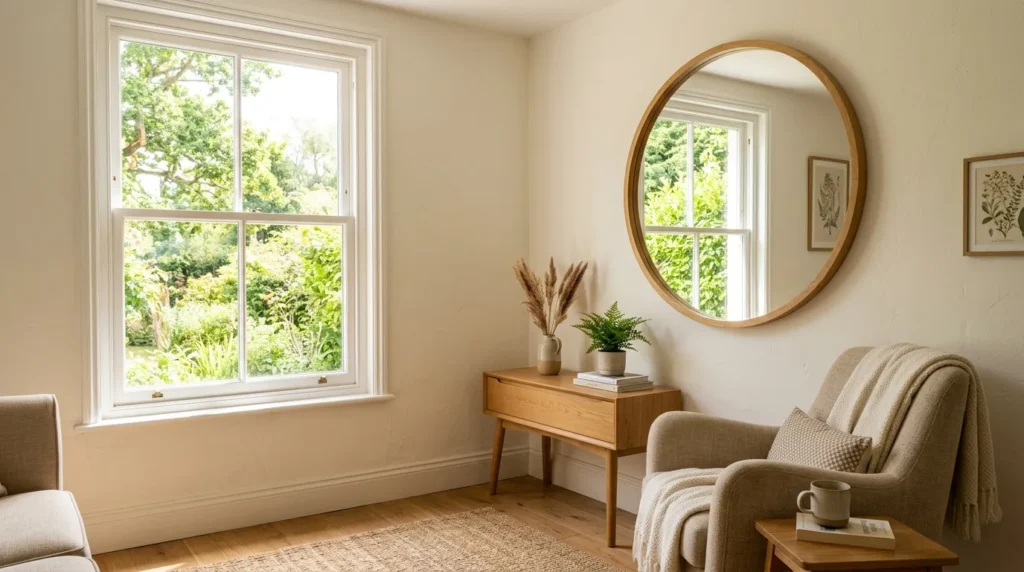
Quick Benefits
- Doubles perceived light instantly
- Adds depth without adding furniture
- Inexpensive compared to renovation
- Works as functional decor
- Easy to change or move later
Why It Works Mirrors are one of the oldest tricks in small-space design because they genuinely work — they reflect both light and the room itself, creating a sense of continuation rather than a hard stop at the wall. I’ve noticed that a single well-placed mirror can do more for a room’s brightness than an extra lamp. The key is placement: a mirror reflecting a blank wall does little, while one reflecting a window or an open sightline can transform the whole room’s light levels.
How To Style It Hang a large mirror directly across from your main window so it reflects daylight back into the room throughout the day. A leaning floor mirror works well in a corner that feels otherwise unused. Avoid placing mirrors where they’ll simply reflect clutter or a blank wall — walk the room and check the reflection before committing to a spot. Grouped smaller mirrors can work too, but one substantial piece typically has more impact than several small ones.
7. Sheer Curtain Styling
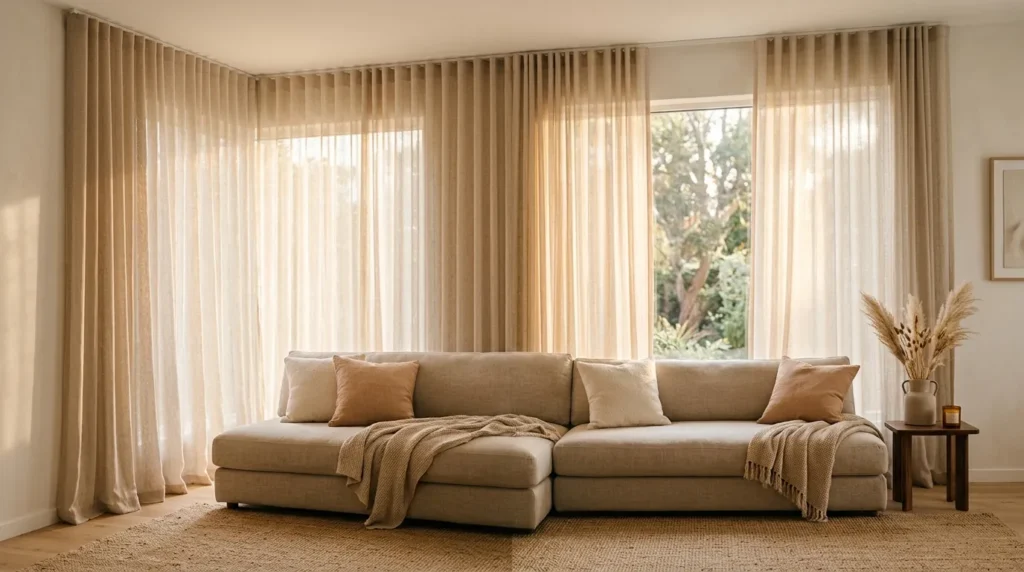
Quick Benefits
- Softens windows without blocking daylight
- Adds height when hung correctly
- Inexpensive to update
- Creates a finished, layered look
- Improves privacy without heaviness
Why It Works Heavy, dark curtains are a common culprit in small rooms that feel dim and closed in. Sheer or lightweight fabrics let daylight filter through even when the curtains are drawn, which keeps the room bright throughout the day. Hanging curtain rods higher than the window frame — closer to the ceiling — is a trick I recommend constantly, since it draws the eye upward and makes the ceiling feel taller than it is, even though the window size hasn’t changed.
How To Style It Mount curtain rods four to six inches above the window frame, and extend them a few inches past the frame on each side so the curtains don’t block window light when open. Choose linen or lightweight cotton in a tone close to the wall color for a seamless look. If full privacy is needed at night, layer a sheer panel with a slimmer blackout liner rather than switching to heavy drapery altogether.
8. Low-Profile Seating
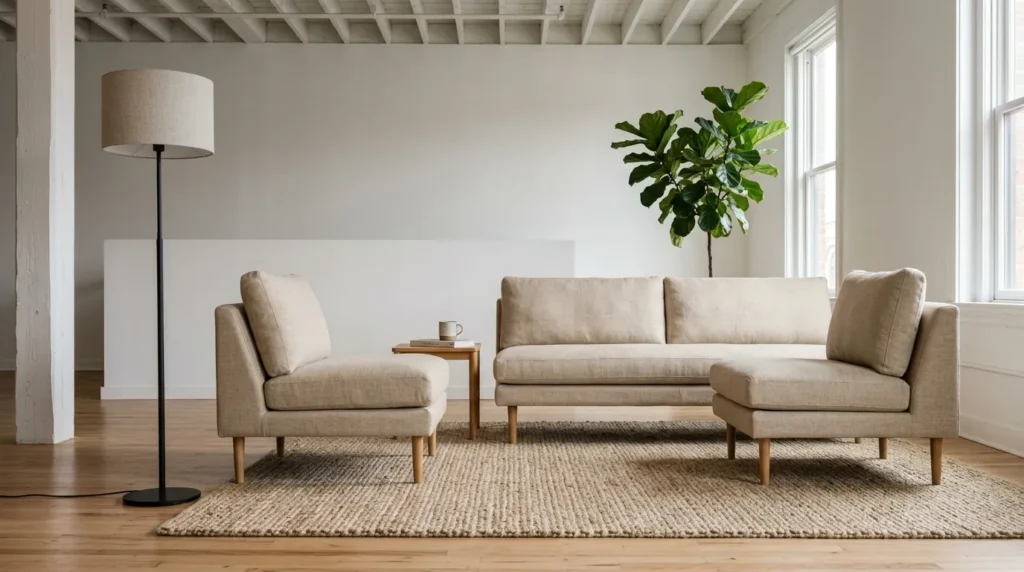
Quick Benefits
- Keeps sightlines open across the room
- Makes ceilings feel taller by contrast
- Often more comfortable for lounging
- Works well with smaller room proportions
- Pairs nicely with layered textiles
Why It Works Furniture scale matters more in a small room than almost anywhere else. A tall, boxy sofa or an oversized sectional can dominate a compact living room and make it feel like the furniture is wearing the room rather than fitting into it. Lower-profile seating — sofas and chairs with slimmer arms and lower backs — takes up less visual space, even when the physical footprint is similar. That’s why many designers recommend measuring not just floor space but also furniture height before purchasing anything for a small room.
How To Style It Look for sofas with slim track arms rather than rolled or oversized arms, which can eat up several extra inches on each side. Choose seating with visible legs instead of a skirted base to keep the floor line visible underneath. If a sectional is necessary, an L-shape tucked into a corner will use space more efficiently than a straight sofa plus separate chairs. Balance low seating with one taller element, like a floor lamp or tall plant, so the room doesn’t feel flat.
9. Statement Lighting Layers
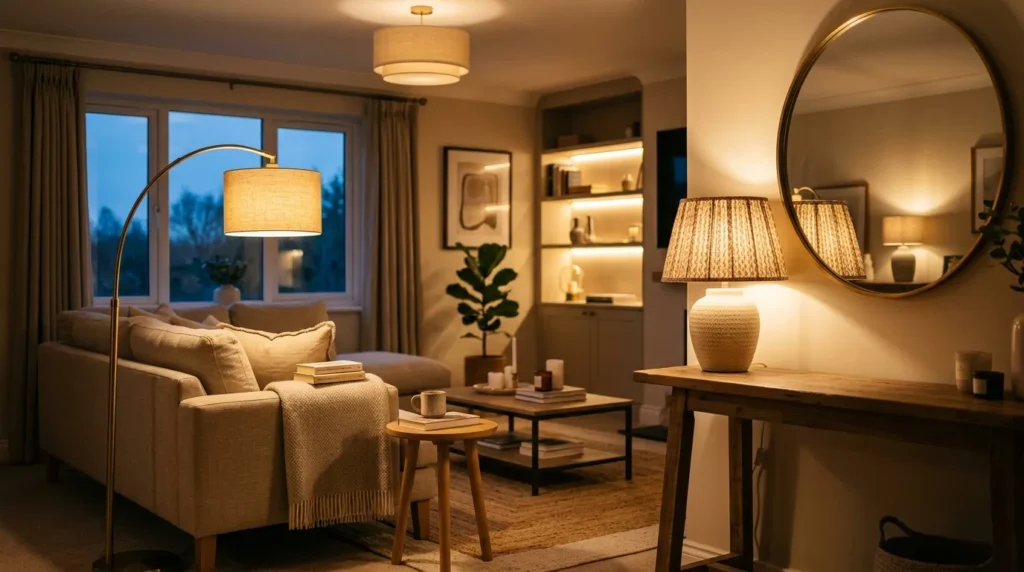
Quick Benefits
- Compensates for limited natural light in the evening
- Adds ambiance without extra floor clutter
- Creates depth through layered brightness
- Draws the eye to focal points
- Easy to update seasonally
Why It Works Relying on a single overhead fixture is one of the fastest ways to make a small room feel flat and under-lit once the sun goes down. Layering light — overhead, table, and floor sources working together — creates dimension and warmth that a single source simply can’t achieve. If you’re anything like me, you’ve probably noticed how a room with only a ceiling light can feel almost clinical, while the same room with a floor lamp and a table lamp added feels immediately cozier and more spacious.
How To Style It Add at least one floor lamp in a corner to fill vertical space with warm light, paired with a table lamp near the seating area for a softer glow. Dimmable bulbs let you adjust brightness for different times of day without needing multiple fixtures. Position a lamp near a mirror when possible, since the reflected light amplifies the effect. Warm white bulbs (around 2700K–3000K) tend to feel more inviting than cooler daylight bulbs in living spaces.
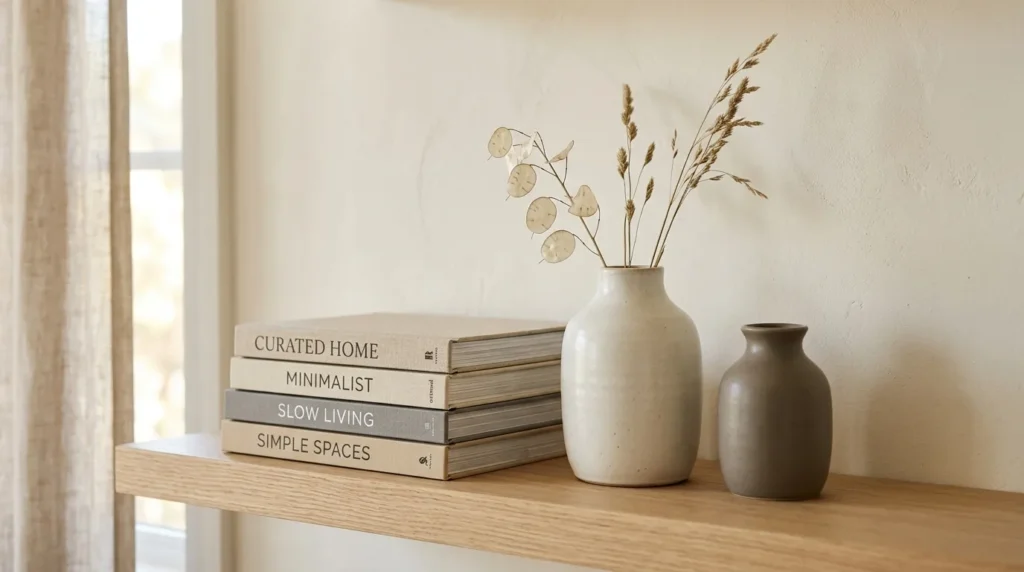
10. Curated Minimal Decor
Quick Benefits
- Prevents visual clutter from accumulating
- Makes each decor piece feel intentional
- Easier to keep the room feeling clean
- Highlights quality over quantity
- Creates a calmer, more restful space
Why It Works Small rooms show clutter faster than large ones — a few extra throw pillows, a stack of magazines, and a handful of knickknacks can tip a compact living room from cozy into cramped very quickly. A mistake many homeowners make is trying to fill every empty surface, when in a small space, empty surfaces are actually doing important visual work. I’ve seen this idea transform spaces simply by editing decor down to a handful of intentional pieces rather than displaying everything at once.
How To Style It Choose one or two meaningful accessories per surface rather than filling every shelf and tabletop. Rotate decorative items seasonally instead of keeping everything out year-round, which also keeps the space feeling fresh. Group small objects into one tray or vignette rather than scattering them, since a cluster reads as one intentional element instead of several small distractions. Leave at least some negative space on every shelf and table so the eye has room to rest.
Frequently Asked Questions
1. What is the best color for a small living room? Soft, warm neutrals like off-white, warm greige, or light sage tend to work best because they reflect available light rather than absorbing it. Keeping walls, trim, and ceiling in similar tones also removes visual breaks that can make a room feel choppier and smaller.
2. Should I use a large rug or a small rug in a small living room? A rug that’s too small for the seating area actually makes a room feel smaller by creating a disconnected “island” effect. In most cases, a slightly larger rug that extends under the front legs of your furniture helps unify the space and makes it feel more grounded and open.
3. Is a sectional a bad idea for a small living room? Not necessarily — an L-shaped sectional tucked into a corner can actually use space more efficiently than a sofa plus several separate chairs. The key is choosing a low-profile design and making sure there’s still a clear walking path around it.
4. How can I make a small living room feel brighter without more windows? Layered lighting, strategically placed mirrors, and lighter wall colors are the three most effective tools when you can’t add windows. Combining all three tends to make a bigger difference than any single change on its own.
5. What furniture should I avoid in a small living room? Oversized sofas with thick rolled arms, bulky coffee tables, and tall opaque bookshelves placed in front of windows are the most common culprits. Furniture with visible legs and slimmer profiles almost always performs better in tight layouts.
6. How do I arrange furniture in an awkward small living room shape? Start by identifying the main walking path through the room and keep it clear first, then build seating around that path rather than the walls. Floating furniture slightly and angling at least one piece can also help an oddly shaped room feel more intentional.
7. Do small living rooms need a coffee table? Not always — a storage ottoman or a set of nesting tables can serve the same purpose while taking up less visual space. If floor space is especially tight, a slim console table behind the sofa can sometimes replace the coffee table entirely.
Conclusion
A small living room doesn’t have to feel small. The ideas above — from floating furniture and layered lighting to strategic mirrors and a lighter palette — work because they address the way a space is actually perceived, not just how much square footage it has. None of these changes require a full renovation, and most can be done over a weekend with things you may already own.
Start with one or two ideas that feel most doable for your space, whether that’s raising your curtain rods or swapping in a storage ottoman, and build from there. Small, consistent changes compound quickly, and before long the room will feel less like a space you’re squeezed into and more like one you actually want to spend time in.
Related Articles
- Cozy Apartment Living Room Ideas
- Neutral Home Styling Guide
- Small Space Storage Solutions
- Budget-Friendly Living Room Makeovers
- Layout Tips for Awkward Living Rooms