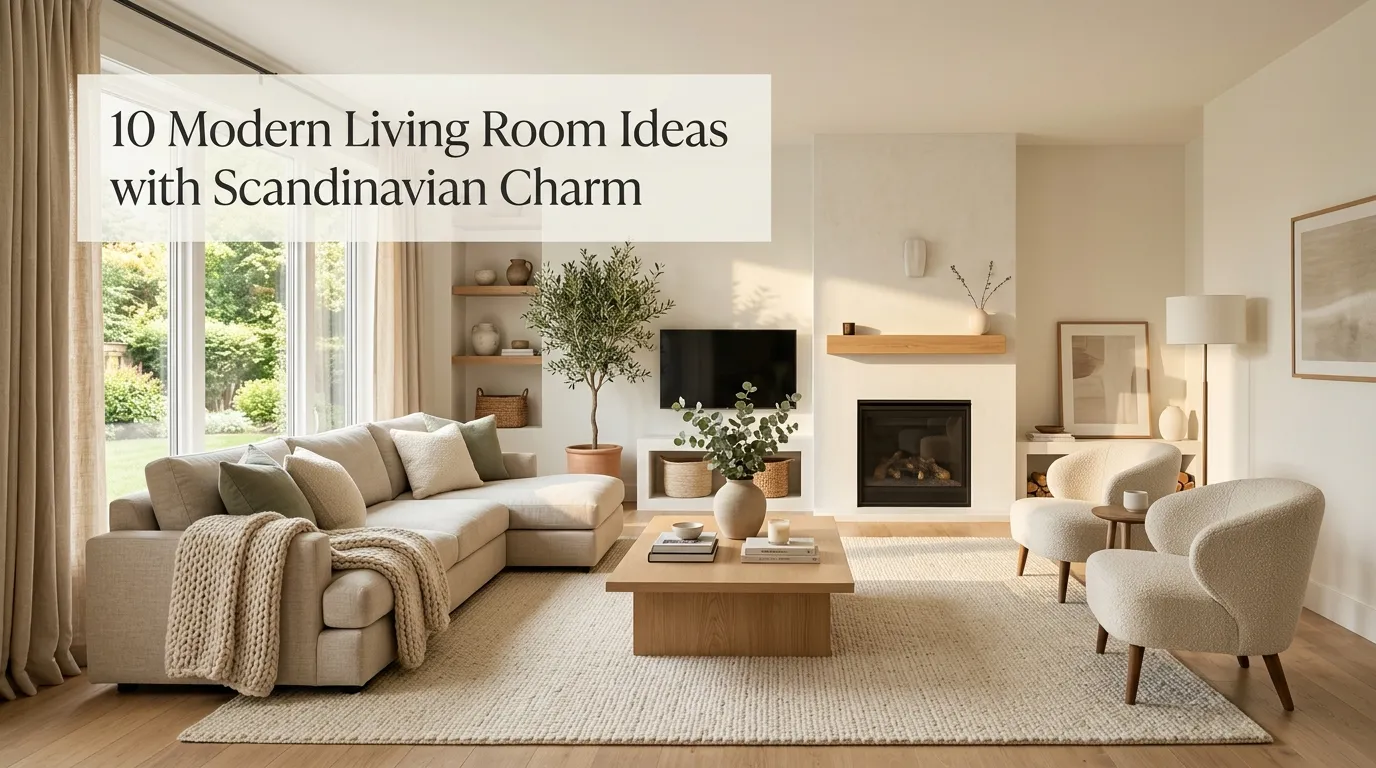
10 Modern Living Room Ideas with Scandinavian Charm
There’s a reason Scandinavian design has stayed popular for decades instead of fading like most trends: it solves a problem almost every living room has. In my experience, people don’t actually want a stark, empty room when they say they want a “minimal” look — what they really want is a space that feels calm, uncluttered, and warm at the same time. That balance is exactly what Scandinavian design has been quietly perfecting since the mid-20th century.
A mistake many homeowners make when trying to recreate this look is going too cold — all white walls, no texture, and furniture that feels more like a showroom than a home. That’s not Scandinavian design, that’s just minimalism without the soul. The actual Nordic approach leans heavily on warmth: natural wood, soft textiles, and layered light that make a room feel lived-in rather than staged.
I’ve noticed that the living rooms people respond to most on Pinterest are the ones that combine clean modern lines with something tactile — a chunky knit throw, a worn leather chair, a plant in a raw clay pot. That contrast between simplicity and warmth is the whole secret. One thing that works especially well is introducing just one or two natural materials per room rather than mixing too many at once.
This guide breaks down ten ideas for bringing modern Scandinavian charm into your living room, with the reasoning behind each one and practical guidance for pulling it off in your own space — whether you’re starting from scratch or updating what you already have.
Table of Contents
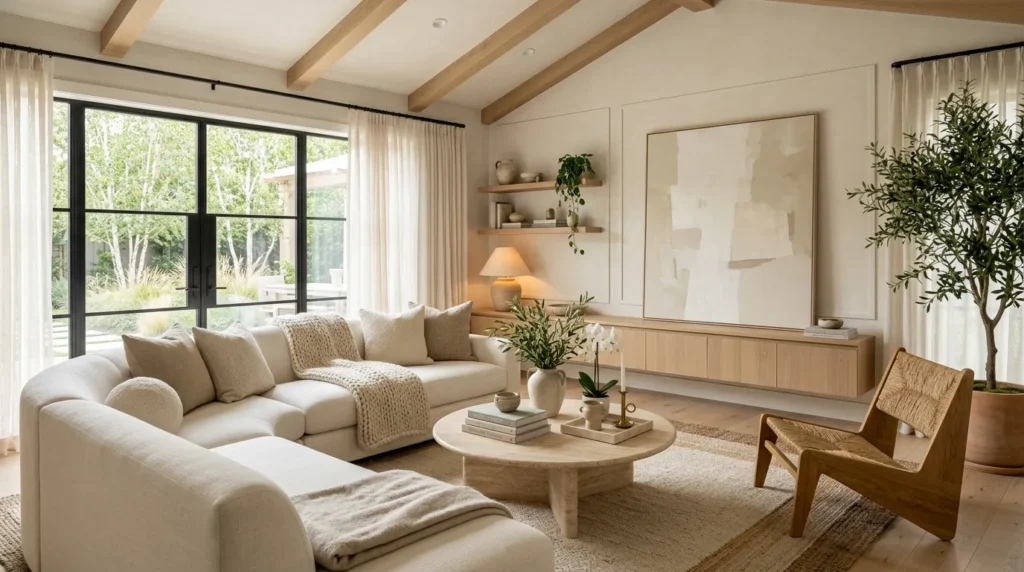
- Warm Wood Tones — Bringing natural wood in without making the room feel dated.
- Layered Neutral Textiles — Using texture instead of pattern for visual interest.
- Functional Minimalism — Choosing furniture that’s simple but purposeful.
- Soft Natural Light — Letting daylight lead the room’s mood.
- Cozy Knit Accents — Adding hygge-inspired warmth through textiles.
- Black Matte Details — Grounding a light room with subtle contrast.
- Sculptural Lighting Fixtures — Choosing lighting as a design statement.
- Muted Green Accents — Bringing in nature without overwhelming the palette.
- Simple Wall Gallery — Curating art with restraint and intention.
- Raw Material Textures — Mixing stone, linen, and clay for depth.
1. Warm Wood Tones
Quick Benefits
- Adds instant warmth to a neutral room
- Prevents the space from feeling sterile
- Pairs naturally with most color palettes
- Brings a sense of craftsmanship
- Works in both modern and traditional homes
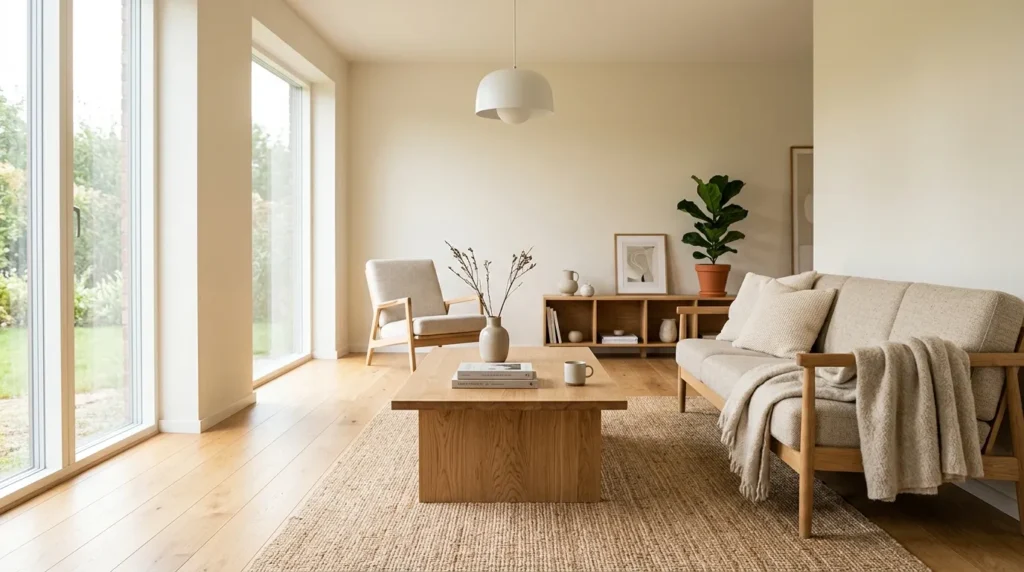
Why It Works Scandinavian design is often mistaken for being all-white, but wood is actually the backbone of the aesthetic. Light woods like ash, birch, and light oak reflect daylight while still bringing warmth and texture that pure white surfaces can’t provide on their own. That’s why many designers recommend anchoring a Scandinavian-inspired room with at least one substantial wood piece — a coffee table, a media console, or exposed flooring — rather than relying only on painted furniture.
How To Style It Choose furniture with visible wood grain rather than painted or laminate finishes, since the natural variation is part of the appeal. A light oak coffee table or a set of wooden dining-adjacent chairs pulled into the living room can anchor the space nicely. If your flooring isn’t wood, a jute or wool rug in a warm tone can echo the same effect. Keep wood tones consistent throughout the room — mixing very warm and very cool wood undertones tends to look unintentional rather than eclectic.
2. Layered Neutral Textiles
Quick Benefits
- Adds depth without adding visual noise
- Keeps the palette calm and cohesive
- Makes a room feel touchable and inviting
- Easy to update seasonally
- Works with any furniture style
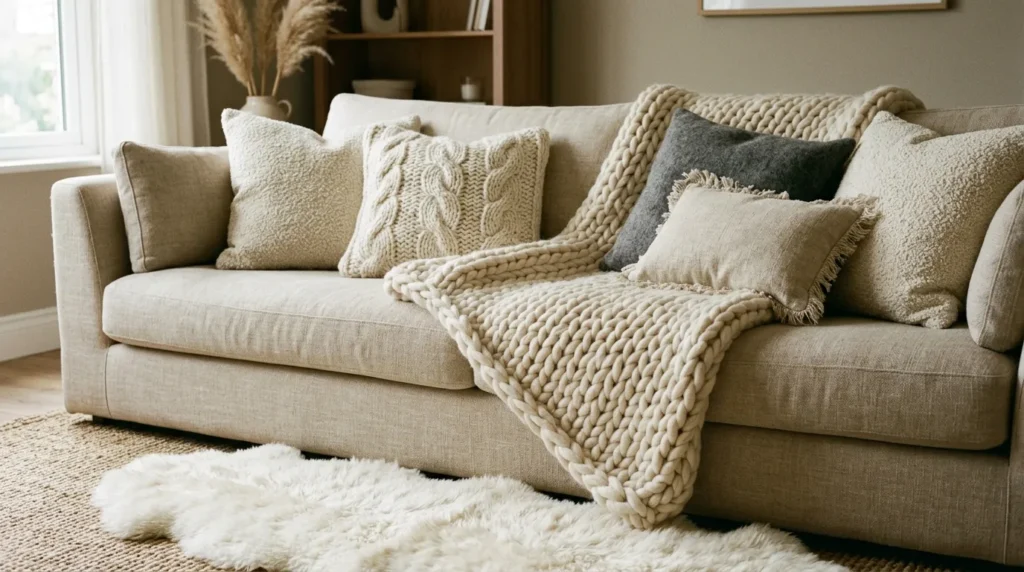
Why It Works Because Scandinavian rooms tend to avoid bold patterns, texture becomes the primary way to create visual interest. A room built entirely from smooth, flat surfaces can feel flat and uninviting no matter how well the colors are chosen. I’ve noticed that layering different textures — bouclé, linen, wool, sheepskin — within the same neutral palette gives a room depth that color alone can’t achieve.
How To Style It Combine a linen sofa with a chunky wool throw and a couple of bouclé or velvet pillows in slightly varying shades of the same neutral. Add a sheepskin or shag accent rug layered over a flatter woven base rug for contrast in texture and height. Avoid matching every textile exactly — slight variation between cream, oatmeal, and warm white keeps the layering from looking flat. Rotate textures seasonally, swapping in heavier knits during colder months.
3. Functional Minimalism
Quick Benefits
- Reduces visual clutter
- Makes each piece feel intentional
- Easier to keep the room tidy
- Encourages quality over quantity
- Adapts well to smaller spaces
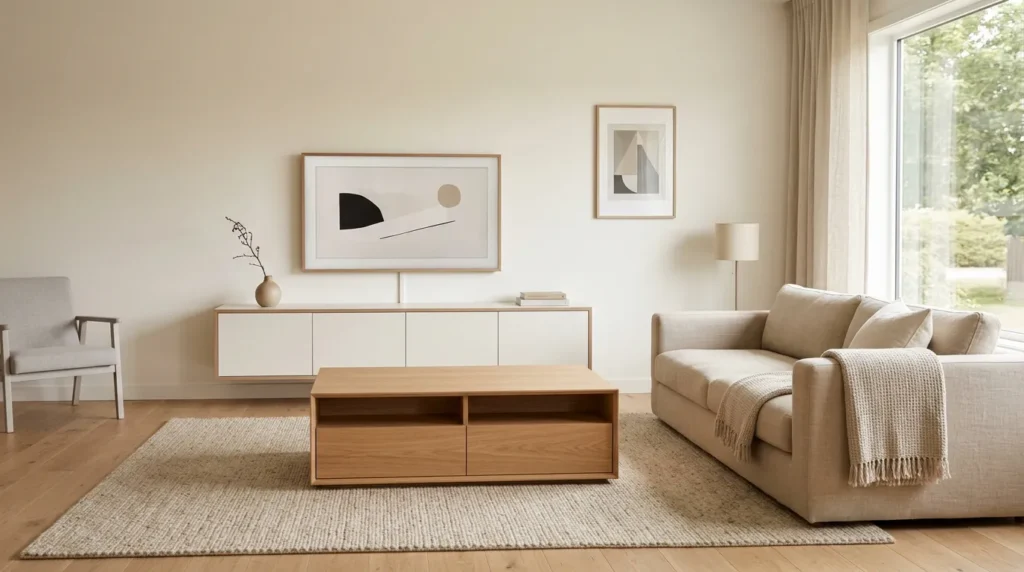
Why It Works Scandinavian design has always prioritized function alongside form — furniture exists because it’s useful, not just because it fills space. A mistake many homeowners make when chasing this look is buying purely decorative pieces that don’t actually serve the room. Functional minimalism means every item, from the coffee table to the media console, earns its place by doing a job well while still looking clean and considered.
How To Style It Choose a coffee table with hidden storage rather than an open shelf cluttered with objects. Opt for a media console with closed cabinetry to hide cords and electronics rather than an open unit. Limit decorative objects to a few meaningful pieces per surface — a single vase, one small stack of books, one sculptural object — rather than filling every inch. If a piece doesn’t serve a clear function or bring genuine joy, it likely doesn’t belong in the room.
4. Soft Natural Light
Quick Benefits
- Central to the entire Scandinavian aesthetic
- Improves mood and daily comfort
- Reduces need for artificial lighting during the day
- Highlights natural textures beautifully
- Costs nothing to prioritize
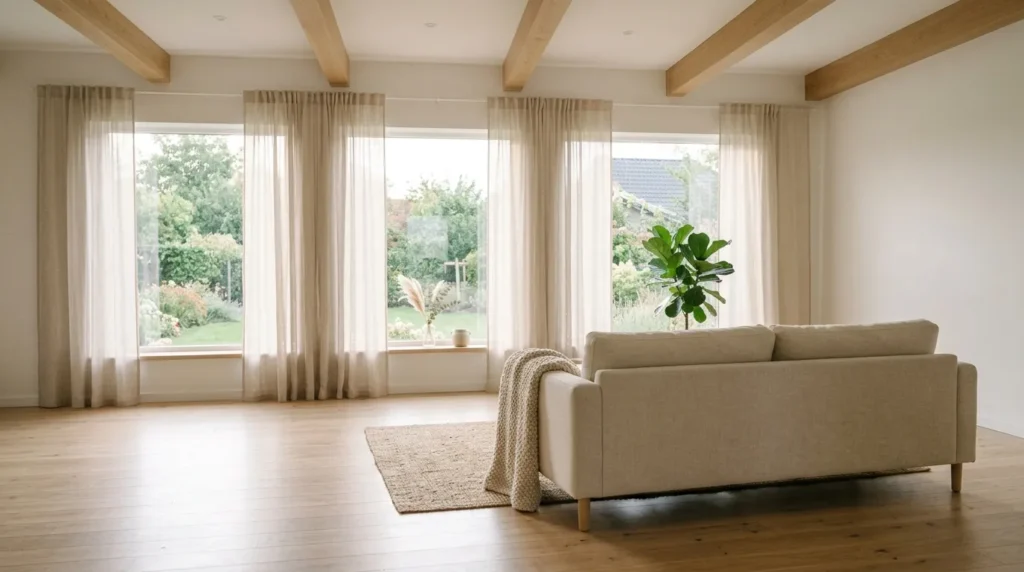
Why It Works Scandinavian design originated in a part of the world with long, dark winters, which is exactly why maximizing daylight became such a core principle. Soft, diffused natural light is what makes the whole palette — the whites, the woods, the neutrals — actually glow instead of looking flat. If you’re anything like me, you’ve probably noticed that a Scandinavian-styled room photographed in dim light loses almost all of its charm, while the same room in soft daylight looks effortless.
How To Style It Keep window treatments light and airy — sheer linen panels or simple woven shades work better than heavy drapery. Position seating to face or angle toward the main light source rather than away from it. Avoid dark, opaque furniture directly in front of windows. If natural light is limited, warm-toned LED bulbs in the 2700K–3000K range can mimic the same soft glow during darker months.
5. Cozy Knit Accents
Quick Benefits
- Introduces the “hygge” warmth Scandinavian style is known for
- Inexpensive way to update a room seasonally
- Adds tactile comfort
- Softens a minimal palette
- Easy to layer without overcommitting
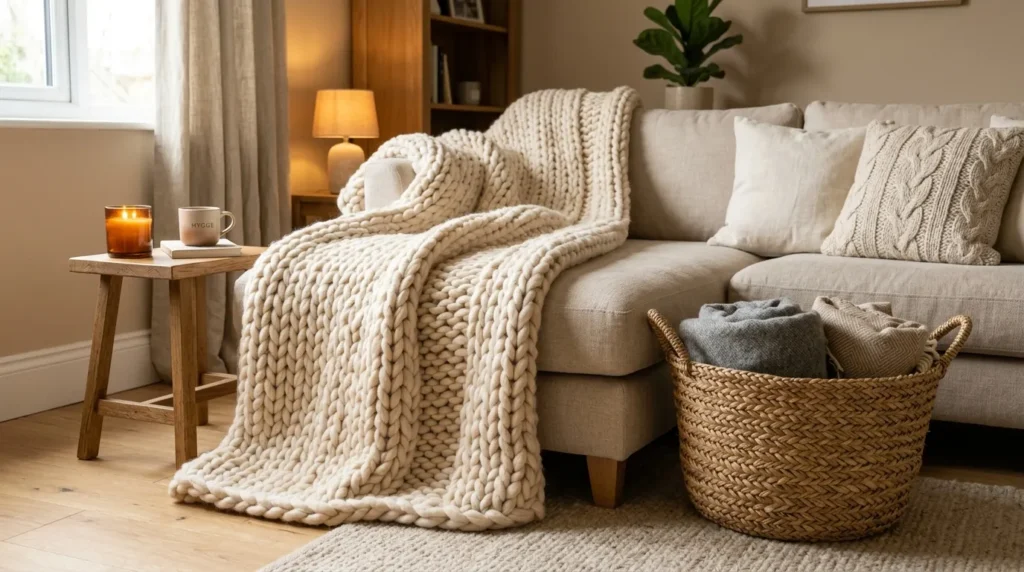
Why It Works The word hygge has become somewhat overused, but the concept behind it is genuinely central to why Scandinavian rooms feel so comfortable despite their simplicity. Chunky knit throws, woven baskets, and textured cushions bring a sense of coziness that keeps a minimal room from feeling austere. I’ve seen this idea transform spaces where a single oversized knit throw draped over a plain sofa completely changed the mood of the room.
How To Style It Drape a chunky knit throw casually over one arm of the sofa rather than folding it perfectly — a slightly relaxed look feels more authentic. Add a woven basket beside the sofa for blankets or magazines, which adds texture and solves storage at the same time. Choose cushions in a mix of knit, linen, and bouclé rather than all one material. Stick to warm neutral tones so the accents complement rather than compete with the base palette.
6. Black Matte Details
Quick Benefits
- Grounds a light, neutral room
- Adds modern contrast without harshness
- Works well in small doses
- Pairs naturally with wood tones
- Prevents the space from feeling washed out
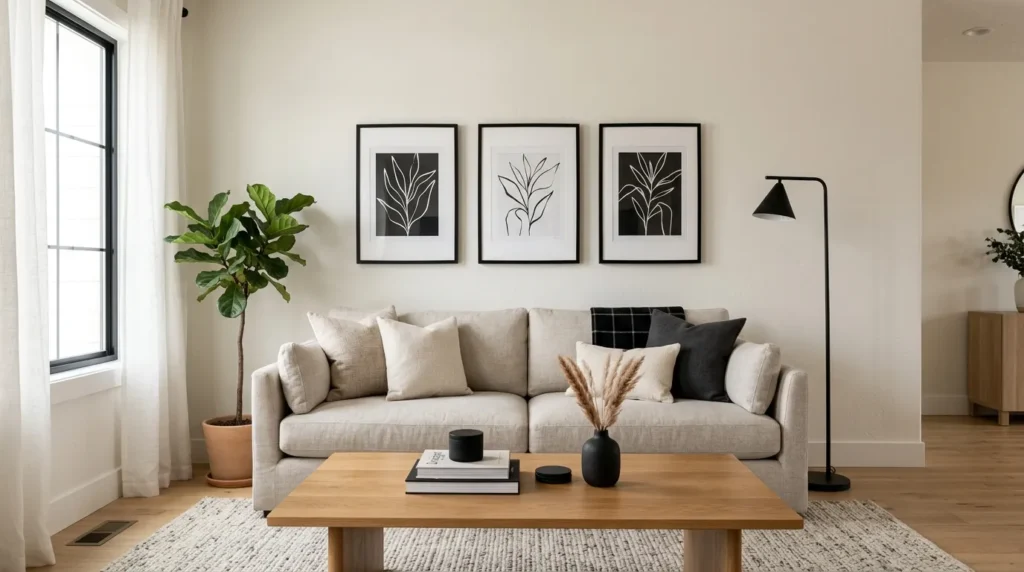
Why It Works An all-neutral room can occasionally feel like it’s missing an anchor, and this is where small touches of black matte detailing come in. A mistake many homeowners make is avoiding dark tones entirely in a Scandinavian-inspired room, when in fact a few matte black accents — window frames, light fixtures, hardware — provide just enough contrast to keep the space from feeling flat or overly soft.
How To Style It Introduce black through a slim matte floor lamp, picture frames, or drawer pulls rather than large furniture pieces. A black-framed piece of art or mirror can act as a visual anchor point in an otherwise light room. Keep black details minimal and spread out rather than concentrated in one area, so the effect reads as intentional contrast rather than a mismatched accent.
7. Sculptural Lighting Fixtures
Quick Benefits
- Doubles as functional art
- Elevates a simple room instantly
- Adds visual interest without clutter
- Reflects Scandinavian design heritage
- Works as a conversation piece
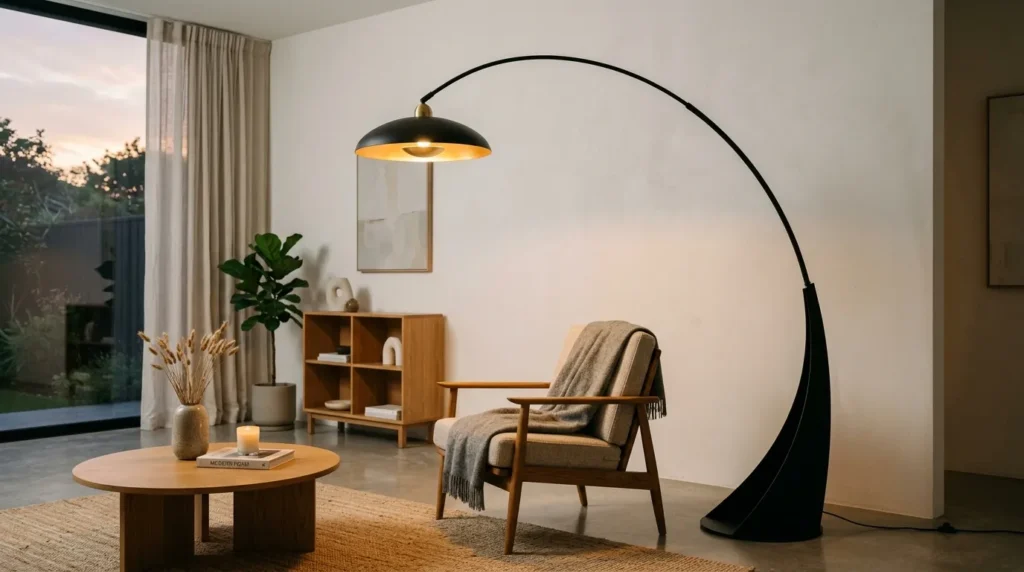
Why It Works Scandinavian countries have produced some of the most iconic lighting design in the world, and it’s not by accident — in a minimal room, a well-designed light fixture becomes one of the few standout visual elements. That’s why many designers recommend investing in one sculptural pendant or floor lamp rather than spreading the budget across several generic fixtures. A single striking piece can do the visual work of several smaller decor items.
How To Style It Choose one statement fixture — a sculptural floor lamp, a paper pendant, or an arc lamp — and let it serve as a focal point rather than competing with other bold elements in the room. Keep the rest of the lighting simple and warm-toned to support rather than distract from the statement piece. Position the fixture where its silhouette is visible against a plain wall or window, since Scandinavian lighting design relies heavily on shape and form.
8. Muted Green Accents
Quick Benefits
- Brings nature indoors without disrupting the palette
- Softens a neutral room naturally
- Pairs beautifully with wood tones
- Adds a living, changing element to the space
- Easy to introduce gradually
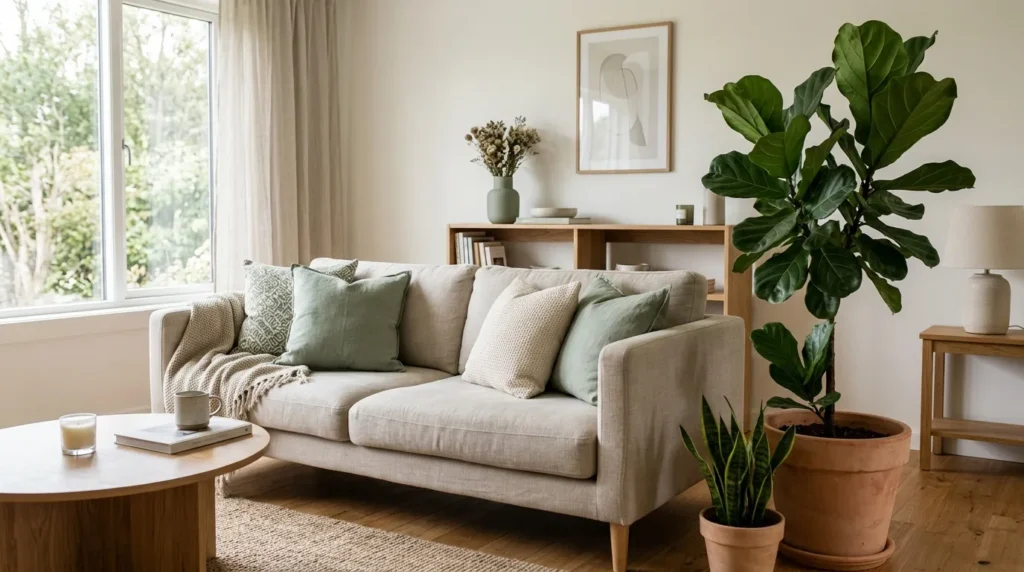
Why It Works Scandinavian design draws heavily from the natural landscapes of the region — forests, moss, muted sage tones — which is why greenery feels so at home in this style. Rather than bright, tropical greens, muted sage and olive tones tend to fit the palette more naturally. I’ve noticed that even a single well-placed plant can soften an otherwise very clean, geometric room and make it feel more organic.
How To Style It Add one or two larger plants, like a fiddle leaf fig or an olive tree, in simple clay or concrete pots rather than patterned planters. Smaller plants on a shelf or windowsill can reinforce the theme without overwhelming the space. If live plants aren’t practical, high-quality faux greenery in the same muted tones can achieve a similar visual softness. Keep planters in raw, natural materials to stay consistent with the overall texture palette.
9. Simple Wall Gallery
Quick Benefits
- Adds personality without clutter
- Easy to update over time
- Creates a focal point on empty walls
- Keeps the room feeling curated
- Works with a range of budgets
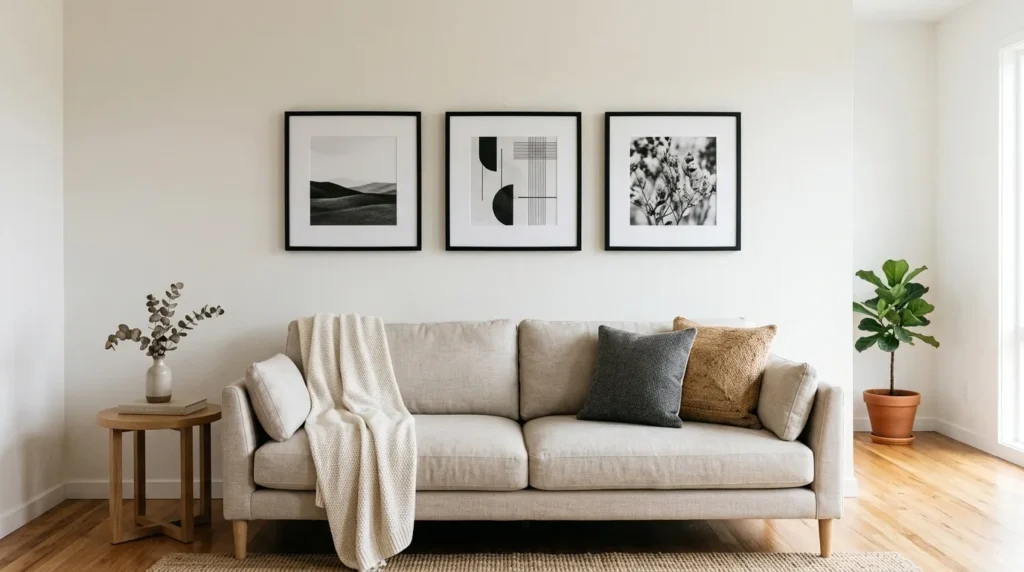
Why It Works Empty walls are common in minimal design, but a completely bare room can feel unfinished rather than intentional. A simple, restrained gallery — a few pieces of art or black-and-white photography in matching or complementary frames — adds personality while staying true to the understated Scandinavian aesthetic. One simple trick I always suggest is choosing fewer, larger pieces over many small ones, since a cluttered gallery wall works against the calm feeling this style is going for.
How To Style It Select two or three pieces of art with a cohesive color story — black-and-white photography, simple line drawings, or abstract prints in muted tones all work well. Use matching or complementary frame finishes, such as light wood or thin black metal, to keep the display feeling unified. Leave generous space between pieces rather than crowding them together. A single large-scale piece above the sofa can sometimes have more impact than an entire gallery arrangement.
10. Raw Material Textures
Quick Benefits
- Adds depth through texture rather than color
- Reinforces the natural, grounded feel of the style
- Creates visual interest without pattern
- Ages well and rarely feels dated
- Pairs beautifully with soft textiles
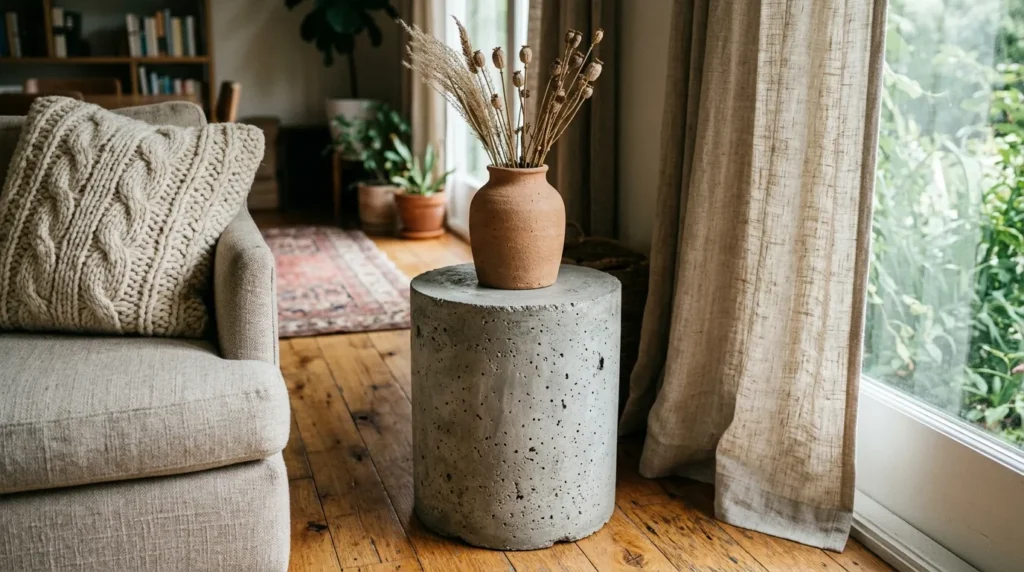
Why It Works Beyond wood, Scandinavian interiors often incorporate a mix of raw, natural materials — stone, linen, clay, and unfinished metal — that add depth without introducing color or pattern. This mix of textures is part of what keeps the style from feeling flat despite its restrained palette. I’ve noticed that rooms relying only on smooth, uniform surfaces tend to feel less interesting than those incorporating a few raw or slightly imperfect materials.
How To Style It Introduce a stone or concrete side table alongside softer wood and textile elements for contrast. Linen curtains or slipcovers add a slightly textured, matte finish that complements the smoother wood surfaces. A raw clay vase or unglazed ceramic bowl can serve as a simple but effective decor accent. Balance rougher textures with at least one soft element nearby, like a knit throw or cushion, so the room doesn’t feel too austere.
Frequently Asked Questions
1. What makes a living room “Scandinavian style”? Scandinavian style centers on light woods, neutral palettes, functional furniture, and an emphasis on natural light, all layered with cozy textiles to avoid feeling cold. It blends minimalism with warmth rather than favoring one over the other.
2. Is Scandinavian design the same as minimalism? Not exactly — minimalism focuses primarily on reducing clutter and simplifying form, while Scandinavian design layers in warmth through natural materials and texture. The two overlap but Scandinavian style is generally cozier and more textural.
3. What colors work best in a Scandinavian living room? Soft whites, warm greiges, muted sage green, and light wood tones form the foundation, with small touches of black for contrast. Bright or highly saturated colors are typically used sparingly, if at all.
4. Do I need real wood furniture for this style to work? Real wood adds authentic texture and grain variation, but high-quality wood-look finishes can work in a budget-friendly setup. The key is choosing warm, light tones rather than glossy or very dark finishes.
5. How do I keep a Scandinavian room from feeling cold or empty? Layer in soft textiles like knit throws, wool rugs, and linen cushions, and add warmth through wood tones and soft lighting. A few plants and curated art pieces also help the space feel lived-in rather than sparse.
6. Can Scandinavian style work in a small living room? Yes — the emphasis on functional furniture, light colors, and minimal clutter makes this style especially well-suited to smaller spaces. The focus on natural light also helps compact rooms feel more open.
7. What’s the easiest way to start incorporating this style? Start with the textiles — a linen sofa cover, a chunky knit throw, and a wool rug can shift the mood of a room quickly and affordably. From there, gradually introduce wood tones, a statement light fixture, and a few curated decor pieces.
Conclusion
Scandinavian design endures because it solves a real tension most people feel in their living rooms: the desire for a clean, uncluttered space that still feels warm and welcoming. By layering natural wood, soft textiles, functional furniture, and thoughtful lighting, you can bring that same balance into your own home without a full renovation or an unlimited budget.
Start with one or two ideas that feel most natural for your space — a knit throw, a wood coffee table, or a simple gallery wall — and build from there. The goal isn’t to recreate a showroom, but to create a living room that feels calm, considered, and genuinely comfortable to spend time in.
Related Articles
- Cozy Bedroom Ideas
- Neutral Home Styling Guide
- Modern Farmhouse Decor
- Small Living Room Layouts
- Budget-Friendly Living Room Makeovers