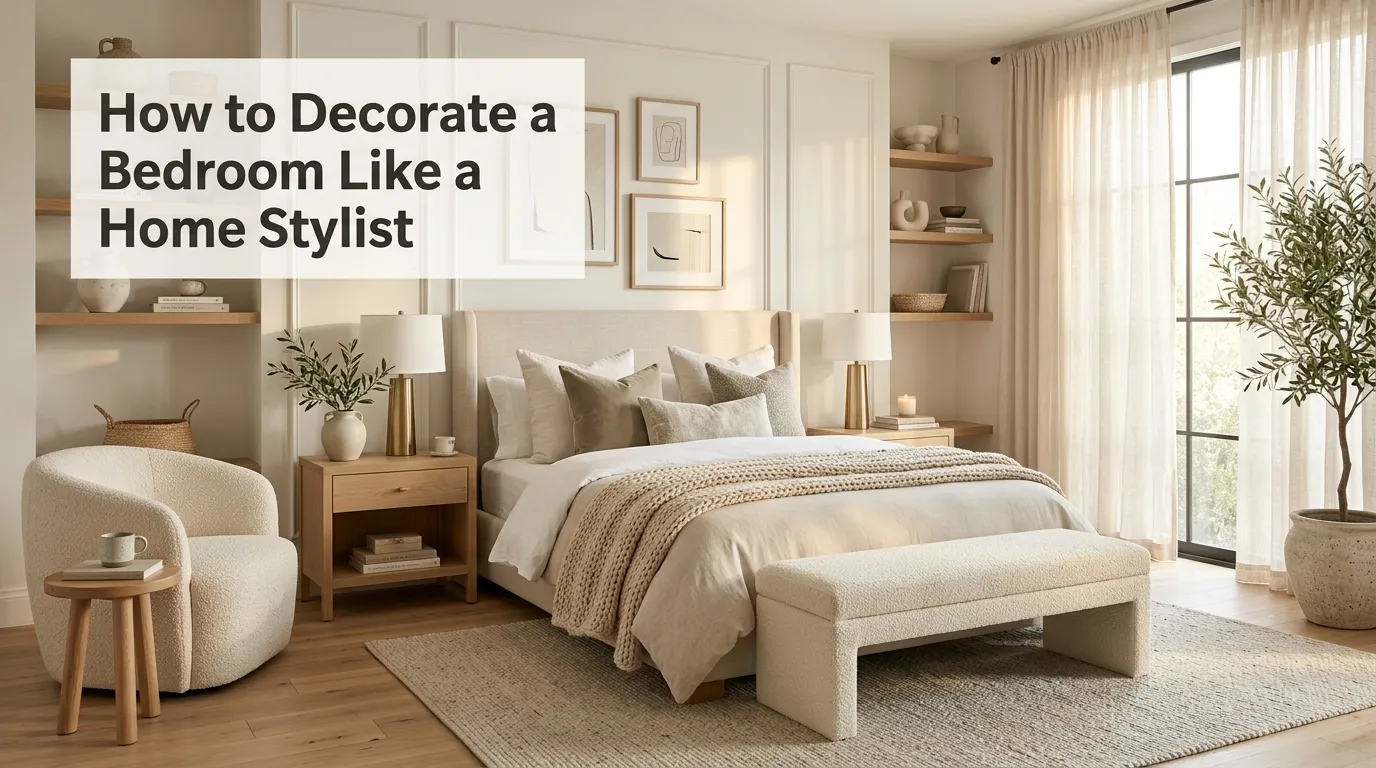
How to Decorate a Bedroom Like a Home Stylist
A beautifully decorated bedroom isn’t just about following the latest trends—it’s about creating a space that feels relaxing, functional, and uniquely yours. Whether you’re starting with an empty room or refreshing a bedroom that feels outdated, thoughtful styling can completely change the atmosphere without requiring a full renovation. The best-designed bedrooms have one thing in common: every piece feels intentional, from the furniture layout to the smallest decorative accents.
Professional home stylists know that a polished bedroom isn’t created by buying expensive furniture. Instead, they focus on balance, layering, texture, lighting, and carefully selected décor that works together to create a cohesive look. Even simple changes like choosing the right bedding, rearranging furniture, or introducing natural materials can make a room feel significantly more inviting and luxurious.
If you’re anything like me, you’ve probably admired beautifully styled bedrooms on Pinterest and wondered how they achieve that effortless, magazine-worthy appearance. The good news is that many of those designer-inspired details are surprisingly easy to recreate in your own home. With a few practical styling techniques, you can transform an ordinary bedroom into a peaceful retreat that feels elegant, comfortable, and highly functional.
In this guide, you’ll discover the same decorating principles many home stylists use to create balanced, welcoming spaces. From selecting a calming color palette to layering textures, maximizing natural light, and adding carefully chosen finishing touches, these ideas will help you design a bedroom that looks professionally styled while still reflecting your personal taste.
Table of Contents
1. Neutral Color Palette
Create a calm, timeless foundation with soft, versatile colors.
2. Balanced Furniture Layout
Arrange furniture to improve comfort, flow, and functionality.
3. Layered Bedding Style
Build a luxurious, hotel-inspired bed with layered textures.
4. Statement Headboard
Anchor the room with a stylish focal point.
5. Soft Lighting Layers
Combine multiple light sources for warmth and ambiance.
6. Natural Texture Mix
Add depth with wood, linen, rattan, and woven accents.
7. Thoughtful Wall Decor
Create visual interest without overcrowding the space.
8. Functional Storage
Keep the bedroom organized while maintaining style.
9. Cozy Accent Seating
Introduce extra comfort with practical seating.
10. Finishing Accessories
Complete the room with carefully selected décor.
1. Neutral Color Palette
Quick Benefits
- Creates a calming atmosphere
- Makes rooms feel larger
- Easy to decorate seasonally
- Matches almost every furniture style
- Gives a professionally designed appearance
Why It Works
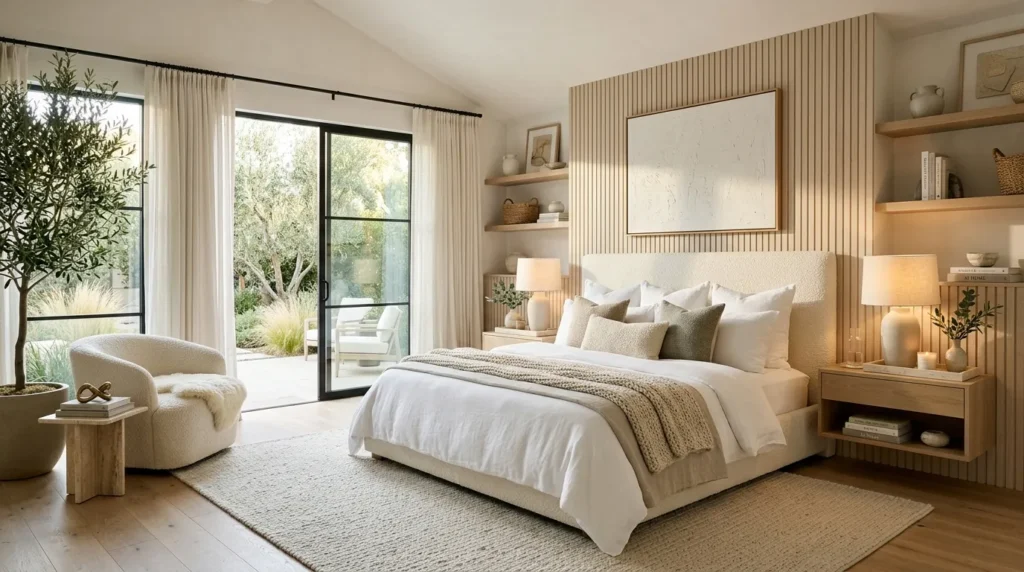
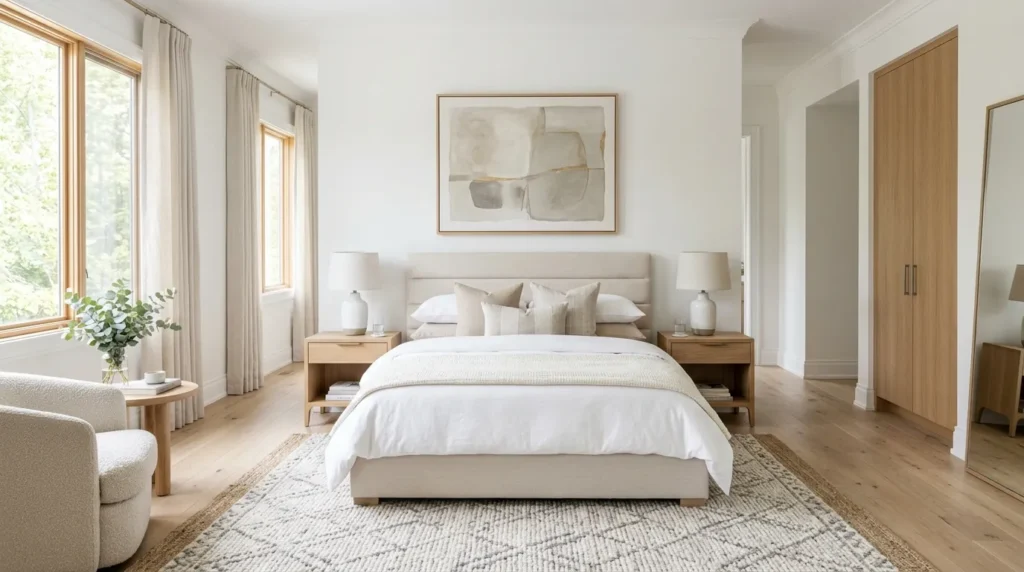
Every beautifully styled bedroom begins with a balanced color palette. Home stylists often rely on warm whites, creamy beiges, soft taupes, gentle grays, and muted earth tones because they create a relaxing backdrop without overwhelming the space. These shades reflect natural light, making bedrooms appear brighter and more open throughout the day.
A neutral foundation also allows furniture, artwork, and decorative accents to stand out naturally instead of competing for attention. I’ve noticed that rooms decorated with softer colors tend to feel more peaceful, making them ideal for rest and relaxation. Rather than chasing bold color trends that may quickly feel dated, a timeless palette provides flexibility to refresh your bedroom with pillows, throws, or seasonal décor whenever you want a new look.
How To Style It
Start by choosing one primary wall color, such as warm white or soft greige, then build your palette using complementary shades throughout the room. Select bedding in layered neutral tones rather than identical colors to create subtle contrast. Wooden furniture, woven baskets, linen curtains, and natural fiber rugs work especially well against these softer backgrounds.
If you enjoy a little color, introduce muted greens, dusty blues, terracotta, or warm caramel accents through decorative pillows, artwork, or ceramics. This approach keeps the room feeling sophisticated while allowing you to easily swap accessories as trends or seasons change.
2. Balanced Furniture Layout
Quick Benefits
- Improves room flow
- Makes bedrooms feel more spacious
- Enhances everyday functionality
- Highlights architectural features
- Creates visual balance
Why It Works
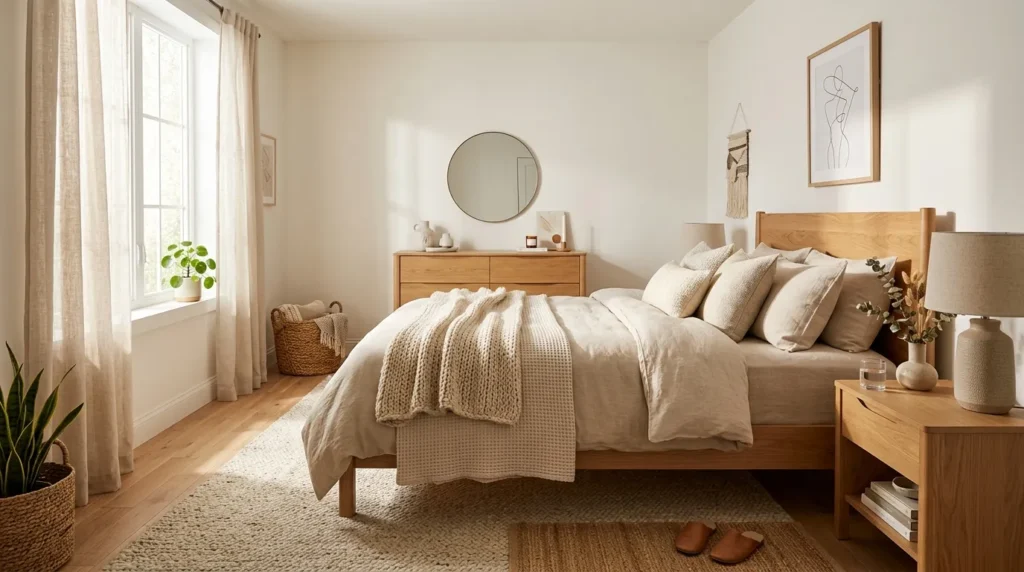
One mistake many homeowners make is filling every available wall with furniture. Professional stylists know that negative space is just as important as the furniture itself. A balanced layout allows the eye to move comfortably around the room while making the space feel larger and less cluttered.
The bed naturally serves as the focal point, so arranging surrounding furniture around it creates harmony. Matching nightstands, symmetrical lighting, and thoughtfully positioned dressers help establish structure without making the room feel rigid. Even smaller bedrooms benefit from leaving adequate walking space around major furniture pieces, improving both comfort and practicality.
How To Style It
Begin by placing your bed on the room’s main wall whenever possible. Leave enough clearance on both sides for bedside tables and comfortable movement. Position a dresser opposite the bed or along the longest wall to maintain visual balance.
Avoid blocking windows with tall furniture so natural light can fill the room. If space allows, add a storage bench at the foot of the bed or a compact reading chair in an unused corner. Before purchasing new furniture, measure the room carefully to ensure every piece fits comfortably without overcrowding the layout.
3. Layered Bedding Style
Quick Benefits
- Creates a luxury hotel feel
- Adds texture and warmth
- Makes the bed the room’s centerpiece
- Improves comfort year-round
- Elevates the entire bedroom instantly
Why It Works
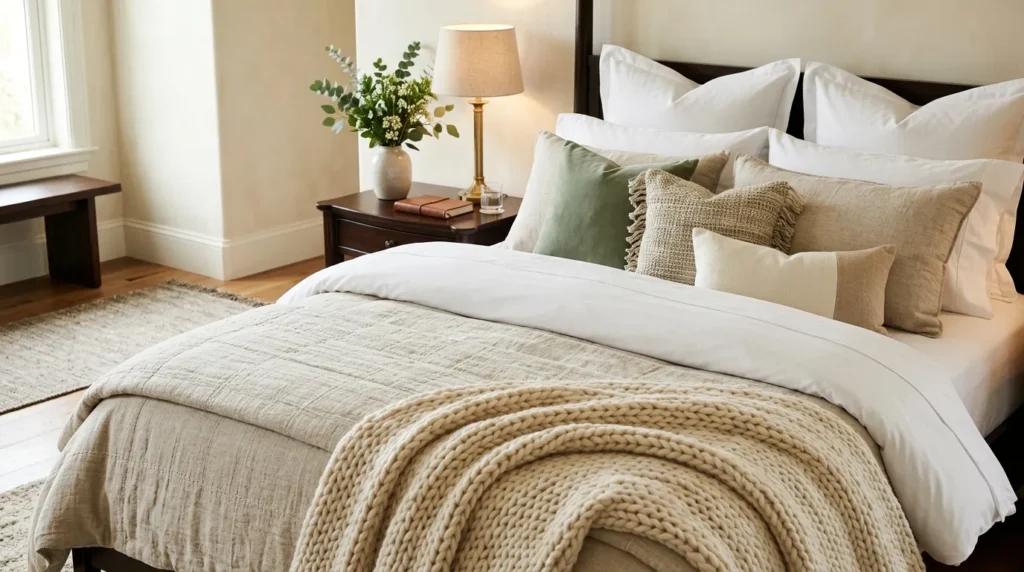
The bed is usually the largest feature in a bedroom, making it the first element people notice. Home stylists rarely rely on a single comforter alone. Instead, they create visual richness by layering quilts, duvets, throws, decorative pillows, and high-quality sheets in complementary colors and textures.
Layering gives the bedroom depth while making it feel warm and inviting. Different materials such as linen, cotton, velvet, boucle, and chunky knit fabrics introduce subtle contrast without relying on bold colors. That’s why many designers recommend investing in quality bedding before spending money on expensive decorative accessories.
How To Style It
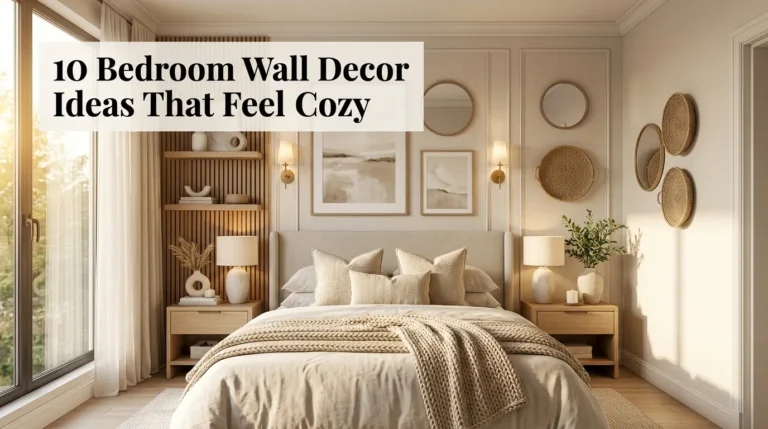
Start with crisp fitted and flat sheets made from breathable cotton or linen. Add a fluffy duvet, then layer a quilt or lightweight coverlet across the lower third of the bed for dimension. Fold a textured throw blanket casually near the foot of the bed to create a relaxed, lived-in appearance.
Complete the arrangement with two sleeping pillows, two larger decorative pillows, and one lumbar pillow for a polished designer finish. Keep the color palette coordinated rather than perfectly matched to achieve a more natural, professionally styled look.
4. Statement Headboard
Quick Benefits
- Creates a strong focal point
- Adds personality without overwhelming the room
- Makes the bed look larger and more luxurious
- Enhances comfort for reading or relaxing
- Instantly elevates the overall design
Why It Works
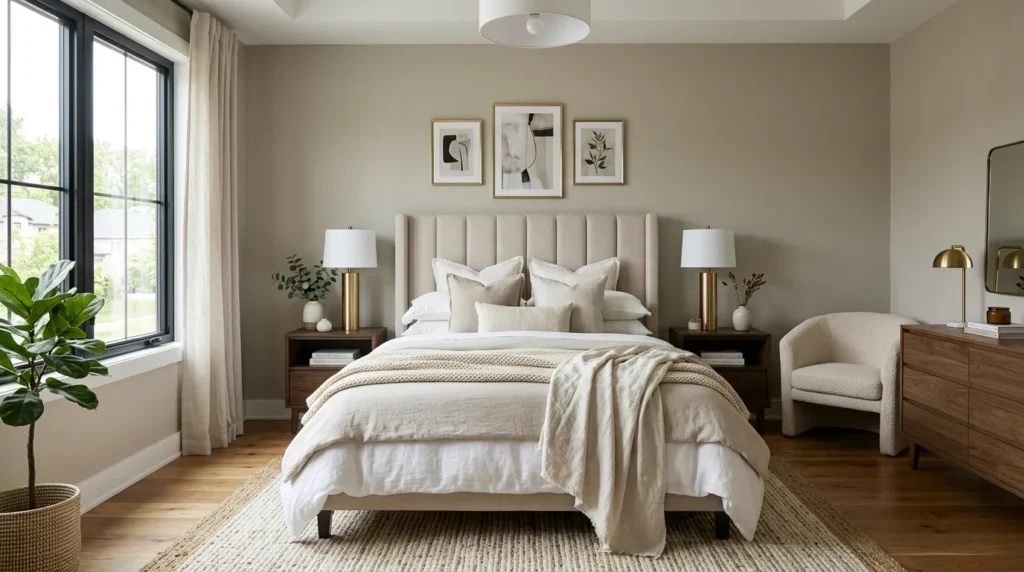
One thing that works especially well in professionally styled bedrooms is giving the bed a clear visual anchor. A statement headboard naturally draws the eye and helps define the sleeping area, making the entire room feel more intentional. Whether it’s upholstered fabric, warm wood, woven cane, or a sleek modern design, the right headboard adds both texture and character.
I’ve seen this simple upgrade transform bedrooms that otherwise felt unfinished. Even in a minimalist space, a thoughtfully chosen headboard introduces depth without adding clutter. It also creates balance by framing the bed, making the room appear more cohesive and polished.
How To Style It
Choose a headboard that complements your room’s style rather than competing with it. For a cozy, timeless look, opt for an upholstered linen headboard in soft beige, ivory, or light gray. If you love organic interiors, natural oak or walnut wood creates warmth and texture, while cane or rattan works beautifully in coastal and boho-inspired bedrooms.
Hang artwork or a large mirror above the headboard only if there’s enough vertical space. Pair it with matching bedside tables and coordinated lamps to reinforce symmetry. Finish the look with layered bedding that echoes the colors and materials of the headboard for a professionally styled appearance.
5. Soft Lighting Layers
Quick Benefits
- Creates a warm, relaxing atmosphere
- Improves functionality throughout the day
- Highlights decorative features
- Makes the room feel inviting
- Adds designer-quality ambiance
Why It Works
Lighting is one of the most overlooked aspects of bedroom decorating, yet it has one of the biggest impacts on how a room feels. Professional home stylists rarely rely on a single ceiling fixture. Instead, they layer multiple light sources to create depth, warmth, and flexibility.
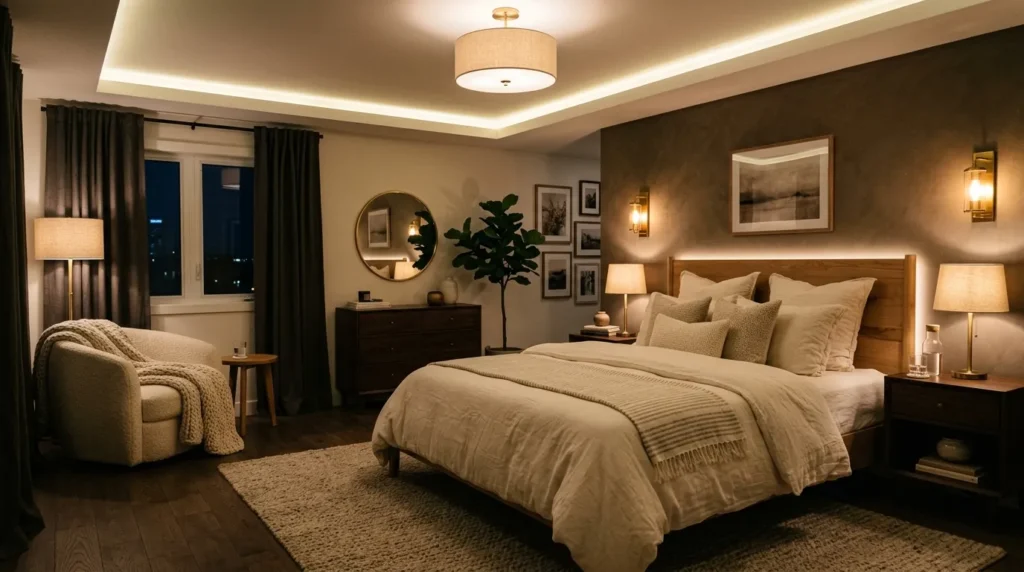
A combination of overhead lighting, bedside lamps, wall sconces, and subtle accent lighting allows you to adjust the mood throughout the day. Warm lighting softens the space, enhances natural materials, and makes colors appear richer. That’s why designer bedrooms often feel cozy even with simple furniture—they’re lit intentionally rather than brightly.
How To Style It
Start with a central ceiling fixture that provides overall illumination. Add matching bedside lamps for reading and evening relaxation. If space is limited, install wall-mounted sconces to free up nightstand surfaces while maintaining balance.
Consider adding LED strip lighting behind the headboard or beneath floating shelves for subtle ambient glow. Choose warm white bulbs between 2700K and 3000K to create a comfortable atmosphere that feels welcoming instead of harsh. Finish with candles or battery-operated lanterns for occasional mood lighting that enhances the room’s cozy appeal.
6. Natural Texture Mix
Quick Benefits
- Adds warmth and depth
- Prevents the room from feeling flat
- Creates a cozy, layered appearance
- Complements nearly every decorating style
- Brings a calming, organic feel indoors
Why It Works
Professional home stylists understand that beautiful bedrooms aren’t defined by color alone. Texture is what gives a room life. Without a mix of materials, even an expensive bedroom can feel cold or one-dimensional. Layering natural textures creates visual interest while maintaining a soft, relaxing atmosphere.
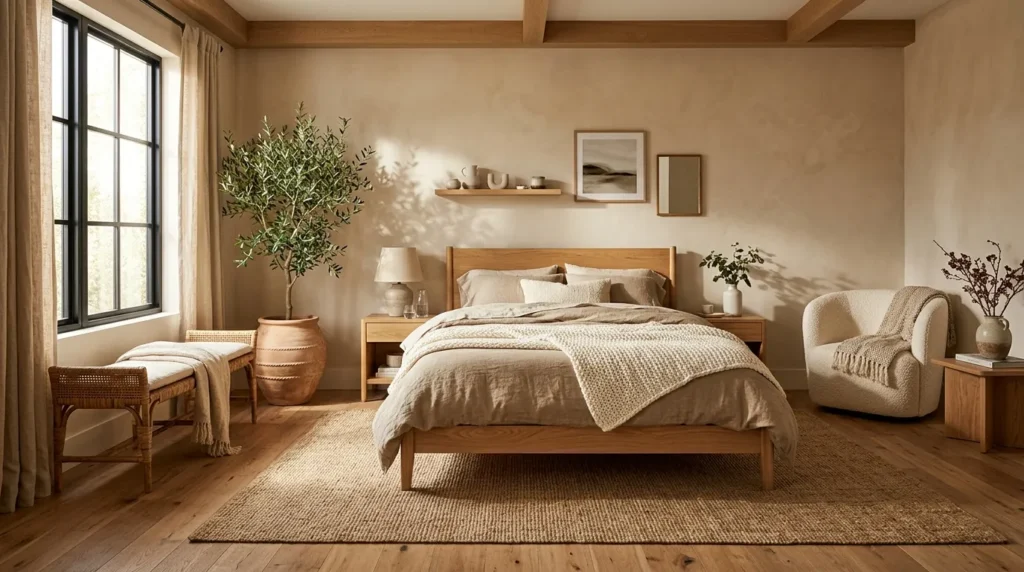
Wood, linen, cotton, wool, woven baskets, rattan, boucle, ceramic accents, and stone finishes all work together to make a space feel balanced and inviting. In my experience, introducing several natural materials instantly makes a bedroom feel warmer and more thoughtfully designed without requiring additional decorative clutter.
How To Style It
Begin with a soft area rug beneath the bed to add comfort and define the space. Pair smooth wooden furniture with linen bedding, woven storage baskets, and chunky knit throws to create contrast. Incorporate ceramic vases, textured planters, or handcrafted décor to add subtle character without overwhelming the room.
Mix finishes carefully rather than matching every surface. Light oak furniture pairs beautifully with woven rattan accents, while darker walnut complements soft boucle fabrics and matte ceramics. Add a few indoor plants for an extra layer of natural texture and fresh color that helps the room feel vibrant yet peaceful.
7. Thoughtful Wall Decor
Quick Benefits
- Adds personality without creating clutter
- Makes walls feel intentional and finished
- Enhances the room’s overall style
- Creates visual balance
- Reflects your personal taste
Why It Works
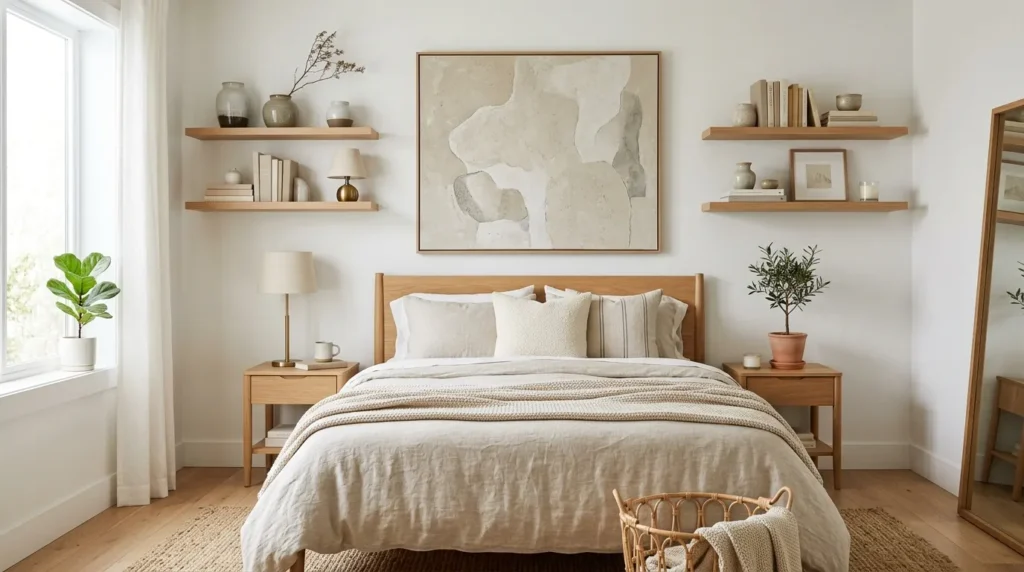
Blank walls can make even a beautifully furnished bedroom feel incomplete, while overcrowded walls can create visual chaos. Home stylists aim for a happy medium by selecting artwork and décor that complements the room rather than overpowering it. Every piece should contribute to the overall mood and color palette.
I’ve noticed that thoughtfully chosen wall décor helps tie the entire bedroom together. Large-scale artwork, framed photography, or textured wall hangings naturally draw the eye upward, making ceilings appear taller and rooms feel more spacious. Keeping the artwork cohesive also creates a sense of calm that supports a restful environment.
How To Style It
Choose one larger focal piece above the bed or dresser instead of filling every inch of wall space with small frames. Soft landscapes, botanical prints, abstract artwork, and neutral photography are timeless options that work with a variety of decorating styles.
If you prefer a gallery wall, limit it to a coordinated collection with matching or complementary frames. Floating shelves can also display books, candles, ceramics, or small plants while keeping the arrangement clean and uncluttered. Maintain enough empty wall space so each decorative element has room to stand out.
8. Functional Storage
Quick Benefits
- Reduces everyday clutter
- Keeps the room organized
- Maximizes available space
- Improves functionality
- Maintains a clean, designer-inspired appearance
Why It Works
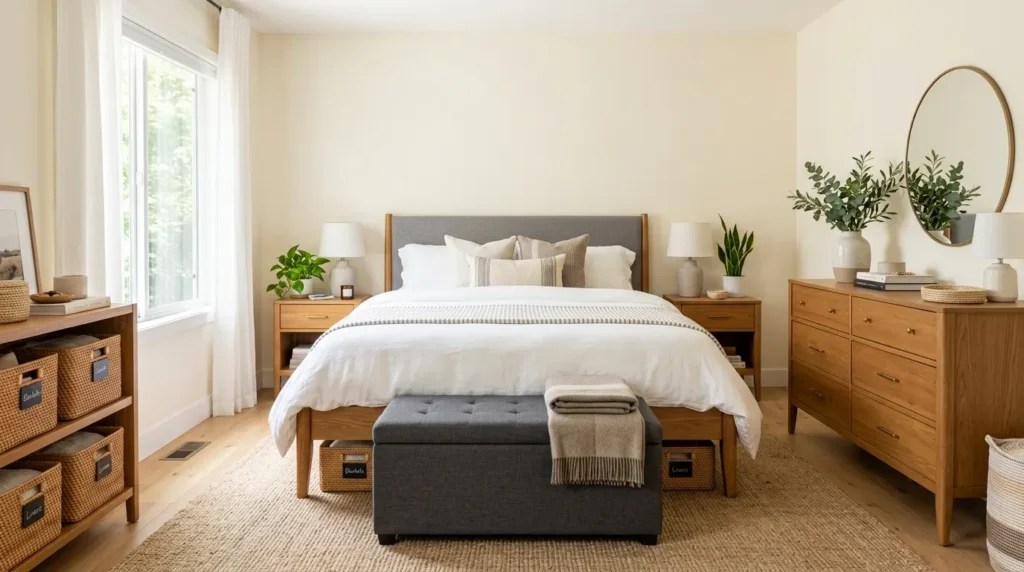
A professionally styled bedroom always looks organized because every item has a designated place. Clutter distracts from beautiful furniture and décor, making the room feel smaller and more stressful. That’s why many designers recommend incorporating stylish storage solutions that blend seamlessly into the overall design.
Hidden storage helps maintain a peaceful atmosphere while making daily routines more efficient. Whether you have a spacious primary bedroom or a compact guest room, thoughtful storage allows decorative pieces to shine without competing with everyday essentials.
How To Style It
Use nightstands with drawers to keep personal items out of sight while maintaining easy access. A storage bench at the foot of the bed provides extra seating and a convenient place to store blankets, pillows, or seasonal bedding.
Decorative woven baskets are perfect for organizing extra throws, magazines, or accessories while adding natural texture. If closet space is limited, consider dressers with deep drawers or under-bed storage containers that maximize every inch without disrupting the room’s clean aesthetic. Display only your favorite decorative items and keep the rest neatly tucked away.
9. Cozy Accent Seating
Quick Benefits
- Creates a relaxing retreat
- Adds visual interest
- Makes the room feel complete
- Provides practical functionality
- Elevates the overall design
Why It Works
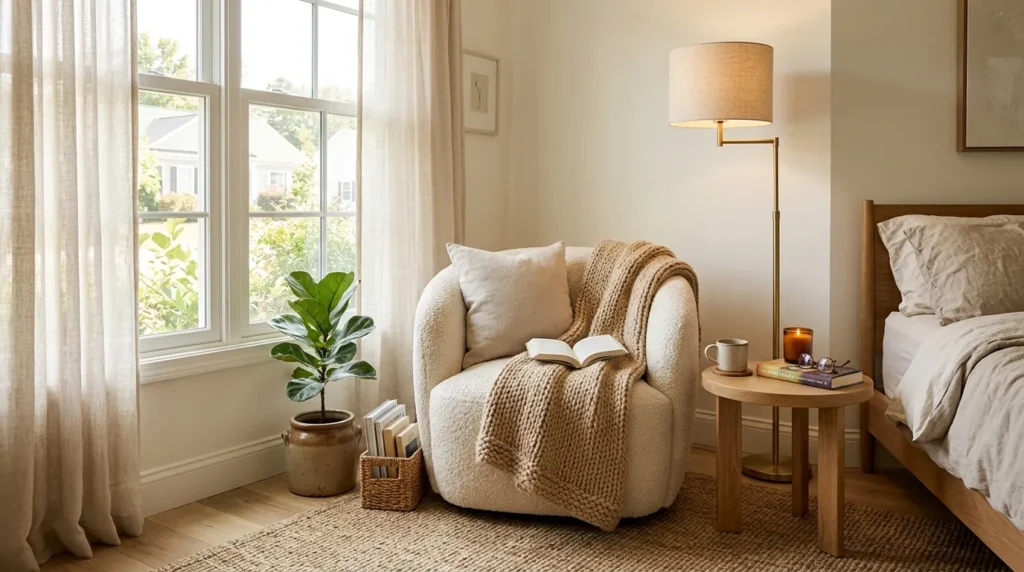
Many professionally styled bedrooms include more than just a bed and dresser. An accent chair, upholstered bench, or small reading nook introduces another layer of comfort while making the room feel thoughtfully designed. Even a compact seating area can transform the bedroom into a multifunctional space for reading, journaling, or enjoying a quiet morning coffee.
One simple trick I always suggest is treating the bedroom as more than a place to sleep. Adding a comfortable seating area encourages relaxation beyond bedtime and gives the room a luxurious, boutique hotel feel without requiring major renovations.
How To Style It
If space allows, place an upholstered accent chair near a window where natural light creates the perfect reading corner. Pair it with a small side table and a soft floor lamp for both style and practicality.
In smaller bedrooms, a compact bench at the foot of the bed offers seating without taking up too much floor space. Add a textured throw blanket and a decorative pillow to connect the seating area with the bedding. Finish the vignette with a nearby plant or woven basket to create a cozy, inviting corner that feels intentionally styled.
10. Finishing Accessories
Quick Benefits
- Completes the overall design
- Adds warmth and personality
- Creates a polished, designer-inspired look
- Allows seasonal updates without major changes
- Makes the bedroom feel lived-in yet organized
Why It Works
The final details are often what separate an ordinary bedroom from one that feels professionally styled. Home stylists don’t fill every surface with decorations—they carefully select a handful of meaningful accessories that enhance the room’s color palette and overall mood. Decorative objects add personality while helping the space feel complete.
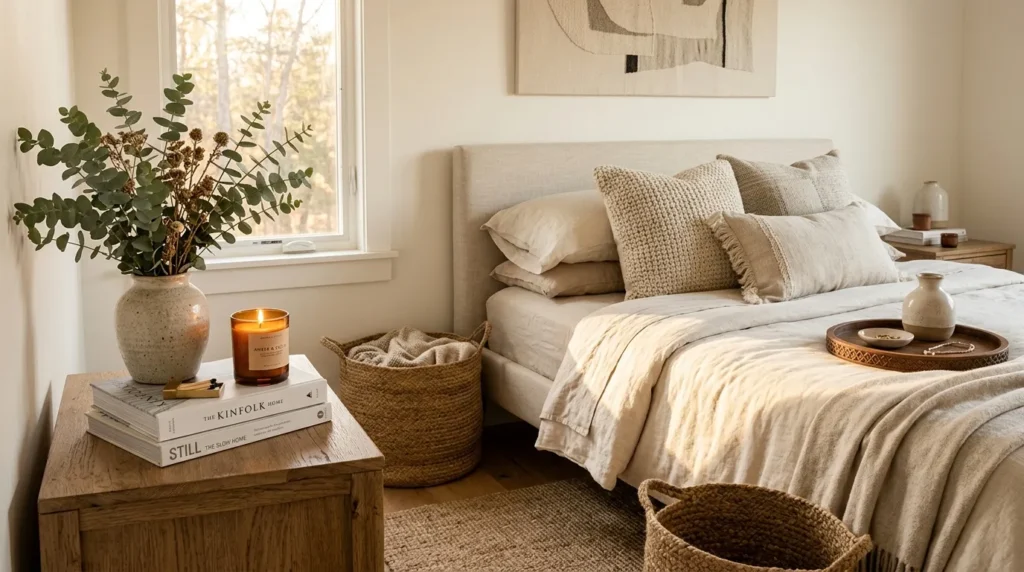
In my experience, it’s the thoughtful finishing touches that make a bedroom memorable. A stack of books, a ceramic vase with fresh greenery, a scented candle, or a handcrafted tray can make the room feel welcoming without adding unnecessary clutter. Keeping accessories intentional ensures every item contributes to the overall design rather than distracting from it.
How To Style It
Style bedside tables with three to five coordinated items, such as a table lamp, a small plant, a favorite book, a candle, and a decorative tray. Vary heights and textures to create visual interest while keeping the arrangement balanced.
Incorporate seasonal accents by switching pillow covers, fresh flowers, or lightweight throws instead of redecorating the entire room. Use mirrors to reflect natural light and make the space feel larger. Finally, step back and remove anything that feels excessive. Designers often say that editing is just as important as decorating, and a carefully curated room always feels more refined.
Frequently Asked Questions
1. What’s the first step when decorating a bedroom like a home stylist?
Start by creating a clear plan. Decide on your overall style, choose a calming color palette, and identify your room’s focal point—usually the bed. Once those basics are in place, you can build the room layer by layer with furniture, lighting, textiles, and accessories that work together.
2. Which colors make a bedroom look professionally designed?
Warm neutrals such as ivory, soft white, beige, greige, taupe, and light gray create a timeless foundation. You can then introduce muted accent colors like sage green, dusty blue, terracotta, or charcoal through pillows, artwork, and decorative accessories for added personality.
3. How can I decorate a small bedroom without making it feel crowded?
Choose furniture that’s appropriately scaled for the room, leave open walking paths, and use multifunctional pieces like storage benches or nightstands with drawers. Mirrors, layered lighting, and a neutral color palette also help smaller bedrooms feel brighter and more spacious.
4. Do all bedroom furniture pieces need to match?
No. Professional stylists often mix complementary materials and finishes rather than purchasing matching furniture sets. Combining wood tones, upholstered pieces, and textured accents creates a more collected, personalized look while maintaining a cohesive color palette.
5. What accessories make the biggest impact?
Quality bedding, decorative pillows, cozy throws, table lamps, greenery, framed artwork, candles, woven baskets, and ceramic vases all contribute to a polished bedroom. Focus on a few well-chosen pieces instead of filling every available surface.
6. How often should I refresh my bedroom décor?
A complete redesign isn’t necessary every year. Updating textiles, decorative accessories, seasonal greenery, or artwork once or twice annually can keep your bedroom feeling fresh while preserving its timeless foundation.
Conclusion
Decorating a bedroom like a home stylist isn’t about following every design trend or purchasing expensive furniture. It’s about creating balance, layering textures, choosing thoughtful details, and designing a space that supports both comfort and everyday living. When every element has a purpose, the room naturally feels calm, inviting, and beautifully put together.
By focusing on a neutral color palette, arranging furniture intentionally, layering luxurious bedding, incorporating natural materials, and adding carefully selected accessories, you can achieve a polished look that feels both timeless and personal. These principles work in bedrooms of every size and style, making them easy to adapt to your own home.
Remember that great design happens gradually. Start with one or two updates that will have the biggest impact, then continue building your space over time. Whether you’re styling a primary suite, guest bedroom, or apartment retreat, small improvements often lead to the most satisfying transformations.
The goal isn’t perfection—it’s creating a bedroom that welcomes you at the beginning and end of every day. With thoughtful choices and a little creativity, you can design a space that looks professionally styled while reflecting your own personality and lifestyle.
Related Articles
- 10 Cozy Bedroom Ideas for a Relaxing Retreat
- 10 Modern Bedroom Ideas That Feel Luxurious
- 10 Neutral Bedroom Color Ideas You’ll Love
- 10 Small Bedroom Storage Ideas That Save Space
- 10 Minimalist Bedroom Ideas for a Calm Home